
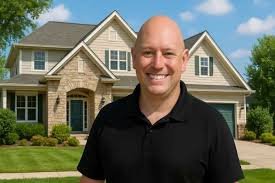
If your credit score isn’t where you want it to be, you’ve probably already hit a wall with a bank or retail lender. They quote you a rate, run a hard pull, and then tell you the program doesn’t fit. That’s not how an independent mortgage broker operates — and it’s not how I work.
I’m Duane Buziak at Cavalier Mortgage, and I’ve closed loans for buyers across Charlottesville, Albemarle County, Crozet, Waynesboro, and Staunton with credit scores that most retail loan officers would have walked away from. The difference isn’t magic. It’s access. As an independent broker, I shop more than 500 wholesale lenders simultaneously, which means I can find the program that fits your actual file, not just the one that fits the bank’s menu. If you’re still getting oriented on what credit score you need for a mortgage, that’s a good place to start before diving into the programs below.
This guide breaks down seven effective strategies for finding low credit mortgage lender options in 2026 — from government-backed loan programs with defined minimum FICO floors to non-QM alternatives built specifically for buyers who don’t fit the conventional mold. I’ll show you real numbers, explain how each program works, and tell you exactly what to bring to the table.
One more thing: you can start this process with a soft credit pull mortgage pre-approval — no hard inquiry, no ding to your score. That matters when your credit is already under pressure. Let’s get into it.
By Duane Buziak, NMLS #1110647 | Cavalier Mortgage | Coast2Coast Mortgage LLC NMLS #376205
1. VA Loans: The Most Forgiving Path for Veterans and Active-Duty Buyers
The Challenge It Solves
Veterans and active-duty service members often assume their credit score disqualifies them from homeownership, especially after being turned away by a bank or retail shop. The reality is that the VA itself sets no minimum credit score requirement for its loan guarantee program. The floor is set by the lender, and retail lenders routinely apply overlays that push that floor to 580 or even 620, leaving eligible borrowers with nowhere to go.
The Strategy Explained
Through the wholesale channel, Cavalier Mortgage approves VA loans in Charlottesville down to 500 FICO. That’s the real floor, not an inflated retail overlay. The program comes with no private mortgage insurance, zero down payment requirement, and competitive wholesale rates that retail lenders structurally cannot match. According to VA.gov, the VA guarantees a portion of each loan, which is why lenders can extend favorable terms even at lower credit tiers.
Eligibility is confirmed through a Certificate of Eligibility (COE), which I can pull directly. Compensating factors strengthen the file: stable employment history, cash reserves, and a debt-to-income ratio below 41% all carry weight with VA underwriters when the credit score is on the lower end of the spectrum.
Implementation Steps
1. Confirm eligibility: active-duty, veteran, or surviving spouse status qualifies. I pull the COE on your behalf as part of the pre-approval process.
2. Gather documentation: DD-214 for veterans, statement of service for active-duty, two years of employment history, and recent pay stubs or bank statements.
3. Identify compensating factors: reserves of two or more months, low residual debt, and a clean payment history on housing expenses all help support the file at lower FICO tiers.
4. Start with a soft pull pre-approval to establish your baseline without affecting your score.
Pro Tips
Don’t let a retail lender’s overlay be your final answer on VA eligibility. The VA’s own guidelines are more flexible than what most retail shops will offer you. If you’ve been told “no” at a bank with a 520 or 540 FICO, that’s the overlay talking — not the program. Wholesale access changes the math entirely.
2. FHA Loans: The Workhorse Program for Sub-620 Buyers
The Challenge It Solves
Most buyers with credit scores below 620 who don’t have VA eligibility assume they’re frozen out of the market. FHA loans exist specifically to fill that gap. HUD’s own guidelines allow financing at 580 FICO with 3.5% down, and even 500–579 FICO with 10% down. The challenge is that retail lenders frequently apply overlays that push the effective floor to 620 or higher, making a government-backed program feel inaccessible when it shouldn’t be.
The Strategy Explained
According to HUD.gov, FHA-insured mortgages are available to borrowers as low as 500 FICO under the 203(b) program. The tradeoff is mortgage insurance premium (MIP), which comes in two parts: an upfront MIP and an annual MIP paid monthly. This is the cost of entry for government-backed low-credit financing, and for most buyers it’s worth it to get into the market.
Here’s a worked example using a Charlottesville-area entry-level purchase. At a $320,000 purchase price with 3.5% down at 580 FICO: your down payment is $11,200, leaving a base loan amount of $308,800. FHA’s upfront MIP of 1.75% adds $5,404, typically financed into the loan, bringing the financed amount to approximately $314,204. Annual MIP at the current HUD schedule of 0.55% for a 30-year loan with less than 10% down adds approximately $144 per month to your payment. Rate varies by market conditions; contact me directly at CavalierMortgage.com for current pricing on your specific file.
Implementation Steps
1. Confirm your FICO tier: 580+ qualifies for 3.5% down; 500–579 requires 10% down. Know your number before you start.
2. Prepare your down payment and closing cost funds. At $320,000, you need $11,200 down plus closing costs — ask about our no-out-of-pocket closing options to understand how seller concessions or lender credits may help.
3. Gather two years of tax returns, W-2s, recent pay stubs, and 60 days of bank statements. FHA underwriting is thorough — documentation gaps slow the file.
4. Factor MIP into your monthly budget from day one. At approximately $144/month on a $314,000 loan, it’s a real line item.
Pro Tips
FHA MIP doesn’t last forever if you refinance strategically. Once your equity and credit improve, refinancing into a conventional loan eliminates MIP entirely. Think of FHA as the vehicle that gets you into the market — not the permanent financing structure.
3. USDA Loans: Zero-Down Access for Crozet, Waynesboro, and Rural Albemarle Buyers
The Challenge It Solves
Buyers in Crozet, Waynesboro, Staunton, and rural portions of Albemarle County often don’t realize they may be sitting inside USDA Rural Development eligibility zones. That matters because USDA offers 100% financing — zero down payment — with no hard FICO floor set at the agency level. For a buyer with limited savings and a credit score below 640, this is one of the most underutilized programs in the market.
The Strategy Explained
According to USDA Rural Development, the Single Family Housing Guaranteed Loan Program provides zero-down financing in eligible rural areas. While most automated underwriting approvals come through at 640+, manual underwriting is available for borrowers below that threshold — meaning a strong compensating factor profile can still get you approved. Property eligibility and household income limits apply and vary by area.
For Charlottesville-area buyers, USDA eligibility in the Charlottesville area depends on your specific address. Verify your property at the USDA eligibility map before falling in love with a home — not every address in Crozet or Waynesboro qualifies, but many do.
Implementation Steps
1. Verify property eligibility at the USDA eligibility map before making an offer. This takes two minutes and saves significant frustration.
2. Confirm household income is within USDA limits for your county and household size. Limits are updated periodically; I verify current figures as part of the pre-approval process.
3. If your FICO is below 640, identify compensating factors: 12 months of clean rental payment history, cash reserves, and low total debt all support manual underwriting approval.
4. Budget for USDA’s guarantee fee (upfront and annual), which functions similarly to FHA MIP but is typically lower. Zero down does not mean zero cost at closing.
Pro Tips
USDA manual underwriting is one of the more misunderstood pathways in low-credit mortgage lending. Most retail loan officers won’t pursue it because it requires more file work. As an independent broker with wholesale access, I submit USDA manual underwriting files regularly. If you’re below 640 and the property qualifies, don’t assume you’re out — ask specifically about manual underwriting eligibility.
4. Non-QM Loans: When Your Income Doesn’t Fit a W-2 Box
The Challenge It Solves
Self-employed buyers, UVA contractors, international faculty, and anyone with non-traditional income structures run into the same wall: tax returns that don’t reflect actual cash flow. Conventional and government-backed programs underwrite to adjusted gross income — which, after legitimate business deductions, often looks far lower than what you actually deposit each month. Non-QM programs were built to solve exactly this problem.
The Strategy Explained
Non-QM (non-qualified mortgage) programs underwrite to alternative income documentation rather than tax returns. Bank statement loans use 12 to 24 months of personal or business deposits to establish income — no W-2s, no tax returns required. Asset depletion programs qualify buyers on the basis of liquid assets rather than monthly income. ITIN and foreign national programs are available for buyers without a U.S. Social Security number, which is directly relevant for international UVA faculty and researchers purchasing in the Charlottesville area.
Credit minimums vary by product. Some non-QM programs accept down to 580 FICO with strong compensating factors; others require 620 or higher depending on the loan-to-value ratio. The full details on how these programs apply locally are covered in the non-QM loan review for Charlottesville.
Implementation Steps
1. Identify your income documentation type: bank statements (12 or 24 months), asset statements, or a combination. This determines which non-QM product fits your file.
2. For bank statement loans, gather 12–24 months of personal or business bank statements. Underwriters will calculate a deposit average; for business accounts, an expense factor is typically applied.
3. For ITIN or foreign national programs, have your ITIN documentation, passport, visa status, and international credit history (if available) ready. These programs have specific documentation requirements that differ from standard U.S. underwriting.
4. Understand that non-QM rates are typically higher than agency rates — the tradeoff for flexibility. Compare the rate premium against the alternative of waiting, renting, or not qualifying at all.
Pro Tips
Non-QM is not a last resort. For self-employed buyers whose tax returns dramatically understate their real income, a bank statement loan may actually produce a stronger approval than a conventional loan would — even if the rate is slightly higher. The right program is the one that gets you approved on terms that make sense for your financial picture.
5. Down Payment Assistance Programs That Stack With Low-Credit Loan Options
The Challenge It Solves
Low credit and limited savings are the two most common barriers to homeownership, and they often appear together. A buyer might qualify for FHA at 580 FICO but not have $11,200 sitting in a savings account for the down payment. Down payment assistance programs address the second barrier without requiring the buyer to solve the first one first. You can move forward with the profile you have today.
The Strategy Explained
Cavalier Mortgage offers Dynamo DPA and Turbo DPA, both of which can be layered with FHA or VA loans. These programs provide down payment funds that reduce the cash-to-close requirement — meaning a buyer who qualifies for FHA at 580 FICO but lacks the full down payment can still move forward. DPA doesn’t repair a credit score, but it removes the cash barrier so that credit score becomes the only variable to manage.
Income caps and purchase price limits apply. In the Charlottesville and Albemarle County market, where prices have trended in the mid-to-upper range, it’s important to verify that your target purchase price falls within program limits. Homebuyer education completion is typically required for DPA programs — this is a straightforward online course, and understanding what a first-time homebuyer course involves will help you plan your timeline.
Implementation Steps
1. Confirm DPA income eligibility. Limits are based on household income relative to area median income (AMI) for your county. I verify current limits as part of the pre-approval conversation.
2. Identify which base loan program the DPA will stack with. Dynamo DPA and Turbo DPA are designed to layer with FHA and VA — not all DPA programs work with all loan types.
3. Complete the required homebuyer education course. Most are available online and take four to eight hours. This is a hard requirement for most DPA programs, not a suggestion.
4. Verify purchase price falls within program limits for Albemarle County or your specific municipality. According to CAAR market statistics, Albemarle County median home prices have been in the upper range in recent periods — confirm your target price qualifies before building a strategy around DPA.
Pro Tips
DPA programs are not charity — they’re structured financing tools. Some come as forgivable second liens, others as deferred payments. Know the structure before you commit. A forgivable DPA that requires five years of occupancy is a very different instrument than a repayable second mortgage. I walk every buyer through the specific terms before we proceed.
6. Broker vs. Retail: Why Your Credit Score Gets a Fairer Review Here
The Challenge It Solves
The same credit file that gets declined at a retail lender often gets approved through the wholesale channel. This isn’t because brokers have lower standards — it’s because retail lenders apply overlays on top of agency guidelines, and those overlays vary significantly from lender to lender. A buyer who hits a wall at one retail shop may have a perfectly approvable file at a wholesale lender three doors down the shelf. The problem is that retail loan officers only have access to their own lender’s shelf.
The Strategy Explained
As an independent broker, I shop more than 500 wholesale lenders simultaneously. Each wholesale lender sets its own overlay thresholds independently. That means I can identify the specific lender whose overlay fits your specific file — something a retail loan officer at a single institution structurally cannot do. This is the core advantage of working with Cavalier Mortgage over a retail shop, and it’s especially pronounced for low-credit buyers where overlay differences are widest.
A soft credit pull mortgage pre-approval is available from the first conversation. No hard inquiry required to establish your baseline and identify which programs fit your file. Retail lenders typically do not offer this — the hard pull happens early and often, before you even know whether the program works for you.
Here’s how the comparison looks directly:
Feature: Lender Type
Cavalier Mortgage (Duane Buziak): Independent Broker — 500+ wholesale lenders
Jenna Stiltner / Atlantic Coast Mortgage (NMLS #907344): Retail Mortgage Company — single lender shelf
Feature: VA FICO Minimum
Cavalier Mortgage: 500 FICO (wholesale access)
Jenna Stiltner / ACM: Retail overlay typically 580–620
Feature: FHA FICO Minimum
Cavalier Mortgage: 580 FICO (per HUD guidelines)
Jenna Stiltner / ACM: Retail overlay often 620+
Feature: Non-QM Access
Cavalier Mortgage: Yes — full wholesale shelf
Jenna Stiltner / ACM: Limited to in-house products
Feature: USDA Access
Cavalier Mortgage: Yes
Jenna Stiltner / ACM: Varies
Feature: DPA Programs
Cavalier Mortgage: Dynamo DPA, Turbo DPA
Jenna Stiltner / ACM: Varies
Feature: Soft Pull Pre-Approval
Cavalier Mortgage: Yes — standard practice
Jenna Stiltner / ACM: Not standard at retail
Feature: Availability
Cavalier Mortgage: 24/7
Jenna Stiltner / ACM: Business hours
Feature: Reviews
Cavalier Mortgage: 1,400+ five-star reviews across Google, Experience.com, Zillow, and Facebook
Jenna Stiltner / ACM: Not verified for this comparison
Feature: NMLS
Cavalier Mortgage: #1110647
Jenna Stiltner / ACM: #907344
For a clean conventional loan with a 700+ FICO, the retail channel may be adequate. For VA down to 500, non-QM, DSCR, or any scenario where overlay thresholds matter, broker independence is the differentiator. Explore all available purchase loan options in Charlottesville to see the full program range.
Implementation Steps
1. Request a soft pull pre-approval before allowing any lender to run a hard inquiry. This establishes your baseline without score impact.
2. Ask every lender you speak with: “What is your overlay on FHA and VA FICO minimums?” If they can’t answer clearly, that’s information.
3. Compare program access, not just rate quotes. A rate quote means nothing if the program doesn’t fit your file.
Pro Tips
Retail overlays are not disclosed prominently. Most buyers don’t know they exist until they’re declined. The fastest way to understand whether you’re hitting an agency guideline or a lender overlay is to have a broker review your file — because a broker can tell you which wholesale lenders would approve it and which ones wouldn’t, and why.
7. Credit Repair Positioning: When to Apply Now vs. When to Wait 60–90 Days
The Challenge It Solves
Not every low-credit buyer should apply immediately. Sometimes the right move is to close a specific gap first — because crossing a FICO threshold by even five or ten points can unlock a materially better rate tier, a lower down payment requirement, or a program you couldn’t access at your current score. The question is whether the gap is closable in 60–90 days and whether the improvement is worth the wait. This is a decision that requires a real baseline, not a guess.
The Strategy Explained
The CFPB explains that credit scores respond to specific behaviors: credit utilization, payment history, derogatory marks, and account age are the primary factors. For buyers near a meaningful threshold, targeted action can move the needle quickly. Paying a revolving account below 30% utilization, disputing a reporting error, or using a rapid rescore can produce results in days rather than months.
Rapid rescore is a broker-initiated process through the credit bureaus. When you’ve paid down a balance or corrected an error, I submit documentation directly to the bureau through the wholesale credit reporting channel, and the updated score is returned in two to five business days — not the 30–60 days you’d wait in the standard dispute process. This is a tool that retail loan officers typically cannot access on your behalf the way a broker can.
The decision framework is straightforward. Apply now if: you have VA or FHA eligibility with strong compensating factors and the rate tier difference between your current score and the next threshold is minimal. Wait 60–90 days if: one or two specific actions will cross a threshold that unlocks a meaningfully lower rate, a reduced down payment, or access to a program you currently don’t qualify for. Start with a no hard inquiry mortgage pre-approval to establish the baseline — then we can map exactly what a score improvement would change for your specific file. Avoiding common mortgage mistakes during this period, like opening new credit accounts or making large purchases, is equally important.
Implementation Steps
1. Get a soft pull pre-approval to establish your current FICO baseline across all three bureaus without affecting your score.
2. Identify specific actions: check utilization on all revolving accounts (target below 30% individually and in aggregate), review all three bureau reports for errors, and flag any recent derogatory items that may be disputable.
3. Evaluate the threshold impact: ask me specifically what changes at the next FICO tier for your target loan program. If the answer is “nothing material,” apply now. If the answer is “your rate drops significantly” or “you unlock 3.5% down instead of 10%,” the wait may be worth it.
4. If rapid rescore is appropriate, I initiate the process after you’ve taken the specific action (paid down the balance, corrected the error). Results typically return within two to five business days.
Pro Tips
The biggest mistake buyers make at this stage is taking generic credit advice — “pay your bills on time” — instead of targeted action mapped to a specific FICO threshold. If you’re at 575 and 580 unlocks 3.5% FHA down payment, that’s a defined target. If you’re at 615 and 620 unlocks a conventional program, that’s a different calculation. Start with the baseline, then work backward from the goal.
Frequently Asked Questions
What is the minimum credit score to get a mortgage in Charlottesville VA?
It depends on the program and the lender. FHA loans are available down to 580 FICO for 3.5% down (per HUD guidelines), and 500–579 FICO with 10% down. VA loans have no agency-set minimum — Cavalier Mortgage approves VA loans down to 500 FICO through the wholesale channel. USDA has no hard floor, with manual underwriting available below 640. Conventional loans typically require 620 minimum.
Can I get a VA loan with a 500 credit score?
Yes, through the wholesale channel. The VA itself sets no minimum credit score for its loan guarantee. Cavalier Mortgage approves VA loans down to 500 FICO. Retail lenders often apply overlays of 580–620, which is why veterans with lower scores get turned away at banks — the overlay is the lender’s policy, not the VA’s rule.
What credit score do I need for an FHA loan in Virginia?
HUD sets the FHA minimum at 580 FICO for 3.5% down, and 500–579 FICO for 10% down. Many retail lenders apply overlays that push the effective floor to 620 or higher. Through the wholesale channel, Cavalier Mortgage lends to the HUD floor — 580 for 3.5% down, 500 for 10% down.
Are there mortgage options for buyers with no credit score?
Yes. Non-traditional credit underwriting uses alternative payment history — rent, utilities, insurance premiums — in place of a FICO score. Some USDA and FHA manual underwriting pathways accommodate borrowers with thin or no credit file. ITIN programs are available for buyers without a Social Security number. Contact Cavalier Mortgage to evaluate your specific situation.
Does applying for a mortgage hurt my credit score?
A hard inquiry from a mortgage application typically has a small, temporary impact on your score. However, multiple mortgage inquiries within a short window (typically 14–45 days, depending on the scoring model) are usually treated as a single inquiry. More importantly, you can start the pre-approval process at Cavalier Mortgage with a soft credit pull — no hard inquiry, no score impact — until you’re ready to move forward.
What USDA loan areas are eligible near Charlottesville?
Portions of Albemarle County, Crozet, Waynesboro, and Staunton fall within USDA Rural Development eligible zones. Eligibility is property-specific — verify your exact address at the USDA eligibility map before making an offer. Not every address in these areas qualifies, but many do. Income limits also apply by household size and county.
Can I get a mortgage if I’m self-employed with a low credit score?
Yes. Non-QM bank statement loans underwrite to 12–24 months of deposits rather than tax returns, which addresses the income documentation challenge for self-employed buyers. Credit minimums on non-QM programs vary by product, with some accepting 580 FICO with strong compensating factors. ITIN programs are also available for buyers without a Social Security number. A broker with wholesale non-QM access — not a retail lender with a single product shelf — is the right resource here.
How long does it take to improve my credit score before applying for a mortgage?
Targeted actions — paying a revolving account below 30% utilization, correcting a reporting error — can move a score in 30–60 days through the standard cycle. Through rapid rescore, a broker-initiated process, documented improvements can reflect on your credit report in two to five business days. The right timeline depends on what specific actions you’re taking and which threshold you’re trying to cross. Start with a soft pull pre-approval to establish your current baseline before deciding whether to apply now or wait.
Putting It All Together: Your Implementation Roadmap
Low credit doesn’t mean no options. It means you need a broker who has access to the full range of programs, not just the ones on a bank’s approved list. VA loans down to 500 FICO, FHA at 580 with 3.5% down, USDA in Crozet and Waynesboro with zero down, non-QM for self-employed and international buyers, and DPA programs that remove the cash-to-close obstacle — these aren’t workarounds. They’re the actual mortgage market, accessed through a wholesale shelf that retail loan officers simply don’t have.
Here’s how to prioritize: if you have VA eligibility, start there — it’s the strongest low-credit program available and carries no PMI. If you’re at 580+ without VA eligibility, FHA is your next move. If your property is in a USDA-eligible zone and you have limited cash, zero-down USDA financing may be the most efficient path. If your income is non-traditional, non-QM is the tool built for your file. And if you’re close to a meaningful FICO threshold, a rapid rescore conversation takes five minutes and could change your rate tier entirely.
I’m Duane Buziak, Virginia’s Broker of the Year 2024–2025 and a Scotsman Guide Top 114 Originator nationally. I’ve closed more than 1,400 transactions with five-star reviews across Google, Experience.com, Zillow, and Facebook — and I work solo, which means your file gets my direct attention, not a junior processor’s. I’m available 24/7, which matters when you’re moving fast in the Charlottesville market.
Start with a mortgage pre-approval without hard pull. I’ll tell you exactly which programs you qualify for today and what, if anything, would unlock better pricing in 60–90 days. Whether you’re a first-time buyer, UVA faculty member, or exploring non-traditional loan options, get your personalized rate quote now and discover why over 1,400 five-star reviews have made Cavalier Mortgage Virginia’s consecutive VA Broker of the Year. Call me directly at (434) 443-7028.