
Most UVA employees do something that quietly costs them thousands of dollars: they walk into the nearest bank branch, accept the first rate quoted, and sign a 30-year commitment without ever knowing what a competing lender would have offered. It happens constantly in Charlottesville. And it’s entirely avoidable.
The UVA community represents one of the most financially diverse borrower pools in Virginia. You have tenured professors with clean W-2 income and decades of employment stability. You have UVA Health physicians carrying $300,000 in student loan debt alongside a $280,000 salary. You have international faculty on H-1B visas who don’t have a Social Security number yet. You have grant-funded researchers whose income continuity makes retail bank underwriters nervous. Each of these profiles has a loan program that fits — but finding it requires access to more than one lender’s product shelf.
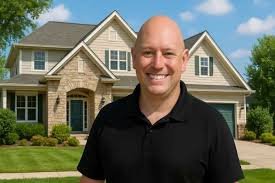
This article is written by Duane Buziak, NMLS #1110647, Charlottesville-based independent mortgage broker with Coast2Coast Mortgage LLC (NMLS #376205), consecutive VA Broker of the Year 2024–2025, and Scotsman Guide Top Originator ranked #114 nationally in 2025 with $44.4M closed across 124 loans. I’ve closed home loans for UVA employees across every profile described above. What follows is a complete breakdown: which programs fit which UVA employment types, what the real numbers look like on Charlottesville and Albemarle County purchases, and why an independent broker with access to 500+ wholesale lenders consistently outperforms a single retail bank for this specific borrower population.
One more thing before we start: you can get a full mortgage pre-approval without a hard credit inquiry. No credit hit to your score, no commitment, no obligation. That’s how we start every conversation at Cavalier Mortgage — and it matters in a market where UVA-area homes move in days, not weeks.
The UVA Employee Financial Profile — and What It Means for Your Mortgage
Not all UVA employment looks the same to a mortgage underwriter. Understanding how lenders read your specific employment type is the first step to knowing which programs you qualify for and how to position your application correctly.
Tenured and tenure-track faculty present the cleanest underwriting profile. Two years of W-2 income, a letter confirming tenure or multi-year appointment, and standard documentation. Most conventional and jumbo programs approve this profile without friction.
Visiting and term faculty are more complicated. If your contract has an end date within 12 months, some retail bank underwriters will flag income continuity. An experienced broker knows which wholesale lenders are comfortable with academic appointments and how to document the employment correctly — often using a UVA HR letter confirming the likelihood of renewal or continuation.
Researchers on grant-funded appointments face similar underwriter scrutiny. The income is real and often substantial, but grant cycles create questions about continuity. This is exactly the scenario where a broker’s ability to shop across 500+ wholesale lenders becomes a practical advantage: one lender may decline, while another with different underwriting guidelines approves cleanly.
UVA Health clinicians typically have strong income but often carry significant student loan debt from medical or dental school. The debt-to-income calculation matters here. FHA, conventional, and jumbo programs each handle student loan debt differently in the DTI calculation — a broker can identify which program structure produces the most favorable qualifying ratios for a specific debt load.
International faculty on H-1B, O-1, or J-1 visas represent a borrower profile that many retail banks simply don’t serve well. If you don’t yet have a Social Security number, ITIN mortgage programs exist specifically for this situation. The CFPB has published guidance on mortgage access for non-citizens, confirming that immigration status alone cannot be used to deny a mortgage application. Cavalier Mortgage offers ITIN and foreign national loan programs for UVA international faculty — this is not a niche workaround, it’s a documented loan category.
The Charlottesville and Albemarle County market adds another layer. Home prices in desirable UVA-adjacent neighborhoods — Crozet, the western Albemarle corridor, areas near Barracks Road — regularly push above the standard conforming loan limit. For 2026, verify the current conforming loan limit at FHFA.gov. When a purchase price exceeds that limit, you’re in jumbo territory, and retail banks price jumbo loans very differently than wholesale brokers do. More on that in the numbers section.
The underlying asset here is UVA’s status as a state institution. Lenders view state university employment favorably — it signals income stability, benefit continuity, and low layoff risk. A skilled broker knows how to leverage that underwriting asset across multiple wholesale lenders simultaneously, creating genuine rate competition that a single retail bank’s loan officer structurally cannot offer.
Which Loan Program Actually Fits Your UVA Situation
The right program depends on your employment type, income, credit profile, target location, and whether you’re buying for the first time or moving up. Here’s how the programs map to real UVA borrower scenarios.
Conventional loans serve the majority of UVA W-2 staff and faculty. First-time buyers can access 3% down payment options; repeat buyers typically need 5% down. PMI applies below 20% equity but is removable once you reach that threshold — unlike FHA’s mortgage insurance, which often stays for the life of the loan. The conforming loan limit determines whether your loan qualifies as conventional or jumbo. Check the current limit at FHFA.gov before assuming your Albemarle County purchase falls within conventional territory.
FHA loans make sense for UVA employees with credit scores in the 580–619 range or higher debt-to-income ratios. Per HUD guidelines, FHA allows 3.5% down at 580+ FICO and 10% down for scores between 500–579. For UVA staff managing student debt or earlier credit challenges, FHA’s more flexible DTI thresholds can be the difference between qualifying and not.
VA loans apply to UVA employees who are also veterans or active-duty service members. No down payment, no PMI, and Cavalier Mortgage offers VA loans down to 500 FICO — well below what most retail banks will touch. VA.gov confirms there is no VA-imposed minimum credit score; individual lenders set overlays. Cavalier’s 500 FICO floor is a genuine differentiator for veteran UVA employees with credit challenges.
USDA loans offer zero-down financing for homes in eligible rural and suburban areas. UVA employees considering homes in Waynesboro, Staunton, or parts of western and rural Albemarle County should check current eligibility at the USDA eligibility map — eligibility boundaries shift periodically and must be verified at time of application. Many areas within reasonable commuting distance of UVA qualify, making USDA a real option for employees who want more space or lower price points without a down payment requirement.
Down payment assistance programs — specifically Dynamo DPA and Turbo DPA — are available for qualifying UVA staff who meet income thresholds. These are not described here as grants or free money. They are structured as second liens, meaning a second loan covers the down payment, which is either repayable or forgivable depending on current program terms. The practical effect: a first-time buyer can purchase a home without depleting savings, using the DPA to cover the down payment while the primary loan handles the purchase price. Current program terms should be confirmed directly with Duane before application.
Non-QM and specialty programs cover the more complex UVA profiles:
ITIN loans serve international faculty without a Social Security number. These programs use Individual Taxpayer Identification Numbers for qualification and are a documented, legitimate mortgage category — not a workaround.
Bank statement loans work for UVA employees with significant consulting, speaking, or research income outside their primary W-2. If 12–24 months of bank statements show consistent deposits, this income can be used to qualify even without traditional tax return documentation.
Asset depletion applies to faculty nearing retirement with substantial investment or retirement accounts. Lenders can calculate a monthly income figure based on total assets divided over a loan term — allowing high-net-worth borrowers to qualify even with reduced current income.
DSCR loans (Debt Service Coverage Ratio) are worth noting for UVA employees interested in investment property. Charlottesville’s rental market — driven heavily by UVA student housing demand — creates genuine DSCR opportunity. These loans qualify based on the property’s rental income rather than the borrower’s personal income, making them accessible for employees who want to build a rental portfolio alongside their primary residence.
Real Numbers: What a UVA Employee’s Home Loan Actually Costs
Concepts are useful. Numbers are better. Here are three worked examples using current Albemarle County and regional market parameters. Note: mortgage rates change daily. The math framework below is accurate; for current rate quotes, contact Cavalier Mortgage directly or use the soft-pull pre-approval to see your actual numbers.
Example 1: Conventional Purchase — UVA Administrative Staff, Albemarle County
Profile: UVA staff member, $95,000 annual salary, buying a $480,000 home in Albemarle County. First-time buyer, 740 credit score.
Down payment at 5%: $24,000. Loan amount: $456,000. On a 30-year conventional loan, the principal and interest payment varies with the rate. To illustrate the rate sensitivity: at 6.75%, P&I on $456,000 is approximately $2,957/month. At 6.50% — a 0.25% improvement through broker rate shopping — P&I drops to approximately $2,882/month. That’s $75/month, or $900/year, or $27,000 over the life of the loan. That is the dollar value of rate competition.
Add PMI at approximately 0.5%–0.7% annually on the loan amount (varies by credit score and LTV): roughly $190–$266/month until you reach 20% equity. Albemarle County’s current real estate tax rate should be verified at Albemarle County’s official tax rate page — apply that rate to the assessed value to calculate your monthly tax escrow. Total PITI on this scenario will typically land in the $3,400–$3,700 range depending on current rate and tax assessment, but confirm exact figures with a live quote.
Example 2: Jumbo Purchase — UVA Health Physician, Western Albemarle
Profile: UVA Health physician, $280,000 income, buying a $950,000 home in western Albemarle County. 20% down, strong credit.
Down payment: $190,000. Loan amount: $760,000. This is a jumbo loan — above the current conforming limit set by FHFA. Retail banks typically offer one jumbo product at their internal pricing. An independent broker with multiple wholesale jumbo lenders creates actual rate competition on a $760,000 loan balance.
The math on rate sensitivity at this loan size is significant. A 0.25% rate difference on $760,000 over 30 years represents approximately $45,000 in total interest paid. Over 10 years — the average time most buyers hold a loan before refinancing or selling — that same 0.25% difference represents meaningful monthly savings that compound. This is why broker access to multiple jumbo wholesale lenders is not a theoretical advantage: it’s a measurable dollar difference on the largest loan most UVA physicians will ever take.
Example 3: Down Payment Assistance — UVA Staff, Waynesboro
Profile: UVA administrative staff, $68,000 salary, first-time buyer, $350,000 home in Waynesboro. Qualifies for Dynamo DPA.
Without DPA: a 3% down payment on $350,000 requires $10,500 out of pocket, plus closing costs. With Dynamo DPA covering the down payment as a second lien, the buyer’s upfront cash requirement is reduced substantially — enabling homeownership without depleting an emergency fund or savings account. The second lien adds to total debt, but the primary loan payment on $339,500 at current rates remains manageable on a $68,000 salary depending on other debt obligations.
The key point: DPA is not a grant. It is a structured second lien with specific repayment or forgiveness terms. Current program terms must be confirmed at time of application. What it does is unlock homeownership for buyers who have stable income and strong employment but haven’t yet accumulated a full down payment — which describes a significant portion of UVA’s administrative workforce.
Cavalier Mortgage vs. Atlantic Coast Mortgage — The Structural Comparison
The most frequently referenced mortgage name in Charlottesville realtor circles is Jenna Stiltner at Atlantic Coast Mortgage (NMLS #907344, ACM NMLS #643114). For a clean, conventional purchase with a straightforward borrower profile, retail options can work adequately. But the comparison becomes more significant when the borrower profile is complex — and UVA’s workforce produces complex profiles regularly.
Here is the structural comparison, factual and without invented rate numbers:
Lender Access: Cavalier Mortgage shops 500+ wholesale lenders simultaneously. Atlantic Coast Mortgage operates as a retail lender within a single institution’s product set, rate structure, and underwriting guidelines.
Rate Shopping Ability: Cavalier Mortgage submits the same borrower profile to multiple wholesale lenders and selects the best pricing. Atlantic Coast Mortgage prices from one source.
Program Depth for UVA Profiles: Cavalier Mortgage offers ITIN loans, bank statement loans, asset depletion, DSCR, VA to 500 FICO, Dynamo DPA, Turbo DPA, and non-QM programs. Atlantic Coast Mortgage’s program availability is limited to what a single retail institution offers.
FICO Floor: Cavalier Mortgage: 500 (VA). Retail lenders typically impose higher overlays.
Hours: Cavalier Mortgage: 24/7. Retail loan officers: standard business hours.
Review Count and Score: Cavalier Mortgage (Duane Buziak): 1,400+ five-star reviews — Google 488 at 4.98★, Experience.com 975 at 4.98★, Zillow 76 at 5.0★, Facebook 105 at 5.0★. All volume on one NMLS number, no team aggregation.
Origination Credential: Scotsman Guide Top Originator 2025 (#114, $44.4M, 124 loans); 2026 ($51.2M). VA Broker of the Year 2024–2025 consecutive. Top 1% Nationwide.
The practical implication for UVA employees: a researcher on a grant-funded appointment may be declined by a retail bank’s underwriting guidelines but approved through a different wholesale lender on Cavalier’s shelf. A broker’s job is to match the borrower profile to the right lender — not to force the borrower into the single product the institution sells.
Availability is also a genuine differentiator in the Charlottesville market. UVA faculty are busy. UVA Health clinicians work irregular hours. International faculty may be in different time zones. When a Charlottesville realtor calls at 7pm with a contract deadline, a retail loan officer working 9-to-5 isn’t available. Duane’s 24/7 availability is a structural advantage, not a marketing claim.
The Pre-Approval Process for UVA Employees — No Hard Credit Hit Required
Here’s something most UVA employees don’t know: you can get a complete mortgage pre-approval without a hard credit inquiry. A soft credit pull, as explained by the CFPB, does not affect your credit score. It captures the same credit profile information a hard pull does — score, debt obligations, payment history — without triggering the score impact that a hard inquiry creates.
In a competitive Charlottesville market where UVA-area homes can receive multiple offers within days of listing, having a pre-approval letter in hand before you start touring is essential. A no hard inquiry mortgage pre-approval through Cavalier Mortgage means you can get that letter — and know exactly what you qualify for — without any credit score impact. No commitment, no obligation, no credit hit.
Documentation requirements vary by UVA employment type:
W-2 staff and standard faculty: Two years of W-2 forms, two most recent paystubs, two months of bank statements, government-issued ID. Straightforward.
Faculty with 9-month academic contracts: This is where retail bank underwriters sometimes stumble. A 9-month academic salary paid over 9 or 12 months needs to be annualized correctly. Lenders who haven’t closed UVA faculty loans before may miscalculate qualifying income or flag the summer pay gap as an income interruption. An experienced broker who has closed dozens of UVA faculty loans documents this correctly the first time — using the contract, the annualization methodology, and a UVA HR employment letter confirming the appointment structure.
International faculty (H-1B, O-1, J-1): Passport, current visa documentation, employment letter from UVA HR confirming visa sponsorship and employment terms, ITIN (if no SSN), additional asset documentation showing reserves. The ITIN mortgage program is built for exactly this profile.
The correct sequence in Charlottesville’s market: get pre-approved first, then talk to a realtor. Not the other way around. Realtors working in UVA-adjacent neighborhoods know that buyers without pre-approval letters are not competitive. The mortgage pre-approval without hard pull process at Cavalier Mortgage takes hours, not days — and it costs nothing to start.
8 Questions UVA Employees Ask Before Applying for a Home Loan
1. Can I get a home loan on a UVA academic-year salary with summer pay gaps?
Yes. A 9-month academic salary is annualized by lenders using your contract salary divided over 12 months, regardless of whether your pay is distributed over 9 or 12 months. The key is correct documentation: your faculty contract, recent paystubs, and a UVA HR letter confirming your appointment. Retail bank underwriters occasionally mishandle this; Duane Buziak has closed numerous UVA faculty loans and documents academic income correctly from the start.
2. I’m an international faculty member on an H-1B visa — can I get a mortgage without a green card?
Yes. The CFPB confirms that immigration status alone cannot be used to deny a mortgage. Cavalier Mortgage offers ITIN loan programs for international faculty without a Social Security number, and foreign national programs for buyers with non-immigrant visa status. You will need your passport, visa documentation, employment letter from UVA, and documentation of U.S.-based or international assets.
3. Does UVA offer any employee mortgage assistance programs?
UVA has historically offered limited faculty housing assistance through HR — check directly with UVA Human Resources for current programs. Separately, Cavalier Mortgage offers down payment assistance programs (Dynamo DPA, Turbo DPA) available to qualifying buyers including UVA staff, structured as second liens to cover the down payment requirement. These are workforce assistance programs, not income-restricted housing programs.
4. What credit score do I need for a home loan in Charlottesville?
It depends on the loan program. Conventional loans typically require 620+; FHA allows 580 for 3.5% down per HUD guidelines; VA loans through Cavalier Mortgage go to 500 FICO. If your score is below 620, a mortgage pre-approval without hard pull is the right starting point — it identifies your current score and which programs are available without any credit impact.
5. Can I use a soft credit pull to get pre-approved without affecting my score?
Yes. Cavalier Mortgage’s no credit hit mortgage application process uses a soft pull that captures your full credit profile without triggering a hard inquiry. Your score is unaffected. You receive a complete pre-approval letter showing your qualifying loan amount, program, and estimated rate range — everything you need to make a competitive offer in Charlottesville’s market, with zero credit score impact.
6. Are there homes near UVA that qualify for USDA zero-down loans?
Yes, in certain areas. Waynesboro, Staunton, and parts of rural and western Albemarle County have historically included USDA-eligible properties. Eligibility boundaries change, so verify your specific target address at the USDA eligibility map before assuming qualification. USDA offers zero-down financing with competitive rates for eligible areas — a genuine option for UVA employees willing to commute from outside the immediate Charlottesville core.
7. I have significant student loan debt from medical school — can I still qualify for a jumbo loan?
Yes, in most cases. UVA Health physicians with high student debt loads routinely qualify for jumbo loans because income is also high and lenders evaluate the full debt-to-income picture. The program structure matters: FHA, conventional, and jumbo programs each treat student loan debt differently in the DTI calculation. Cavalier Mortgage evaluates your specific income and debt profile across multiple wholesale lenders to identify the program and lender that produces the most favorable qualifying ratios for your situation.
8. How does being a UVA employee affect my mortgage rate or approval odds?
Positively. UVA’s status as a state institution signals employment stability that underwriters view favorably — low layoff risk, consistent benefit structure, and documented income. This doesn’t automatically produce a lower rate, but it strengthens the overall application. A broker who understands how to present UVA employment to wholesale lenders — particularly for complex profiles like grant-funded researchers or visiting faculty — can leverage that stability more effectively than a retail bank working from a single underwriting rulebook.
Your Next Move as a UVA Employee Homebuyer
You have something most borrowers in Virginia’s competitive housing markets don’t: stable employment with a state institution, documented income, and genuine buying power in one of the most desirable university markets in the country. The only variable is whether you access that market through a single retail bank’s limited product shelf — or through an independent broker with 500+ wholesale lenders, 1,400+ five-star reviews, and 24/7 availability built for exactly your schedule.
The starting point is simple and costs nothing: a soft-pull pre-approval. No hard inquiry, no credit hit, no commitment. You’ll know your qualifying amount, your program options, and your realistic rate range — everything you need to move confidently when the right Charlottesville or Albemarle County home comes to market.
Call Duane Buziak directly at (434) 443-7028 — available 24/7, including evenings and weekends when Charlottesville realtors are writing contracts. Or Get your personalized rate quote now and start with a no-obligation soft-pull pre-approval today.