
Building a custom home in Charlottesville, Albemarle County, Crozet, or the surrounding area is one of the most significant financial decisions you’ll make — and the construction to permanent loan process is the financing engine that makes it possible. Unlike a standard purchase mortgage, a construction-to-perm loan covers both the build phase and converts automatically into your long-term mortgage at completion. One loan. One closing. No scrambling for takeout financing when your builder hands over the keys.
The Charlottesville market makes this particularly relevant right now. Tight resale inventory, rising land values in Crozet and Albemarle County, and the premium UVA faculty and move-up buyers place on custom builds have pushed more buyers toward ground-up construction. But the loan structure is more complex than a conventional purchase, and most retail loan officers — including the big names you’ll hear from your Realtor — don’t do this volume regularly enough to guide you without friction.
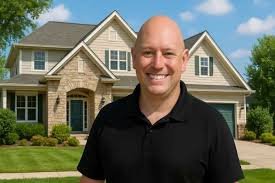
I’m Duane Buziak, NMLS #1110647, independent mortgage broker, Scotsman Guide Top 114 Originator nationally, and Virginia’s Broker of the Year two consecutive years. I’ve structured construction-to-perm loans across Charlottesville, Waynesboro, Staunton, and Albemarle County. This guide walks you through every step — from pre-qualification through final loan conversion — with real numbers, honest timelines, and the pitfalls that derail builds before they start.
You can start the process today with a soft credit pull mortgage pre-qualification — no hard inquiry, no commitment, just clarity on where you stand before you sign with a builder.
Step 1: Understand the Two-Phase Loan Structure Before You Talk to Anyone
Before you call a builder, before you tour a lot in Crozet, before you sketch a floor plan — understand exactly what a construction-to-permanent loan is and how money actually moves through it. Skipping this step is the single most common reason buyers end up confused, stalled, or underfunded mid-build.
A construction-to-perm loan has two distinct phases that function very differently from each other.
The Construction Phase: During this period, your loan functions as a revolving line of credit. Funds are held in a controlled escrow account and released in stages — called draws — as your builder completes verified milestones. You pay interest only on the funds actually drawn, not the full loan amount. This keeps your monthly obligation manageable while the home is being built.
The Permanent Phase: When construction is complete and you receive your certificate of occupancy, the loan automatically converts to a standard amortizing mortgage. Same loan, same closing, same rate you locked at origination. You begin making principal and interest payments on the full outstanding balance.
Here’s the worked example that makes this concrete. Say you’re building in Albemarle County with a $600,000 construction loan. Your builder completes site work and foundation — the first draw releases $120,000. At an illustrative 8.00% construction rate, your monthly interest obligation is: $120,000 × 0.08 ÷ 12 = $800/month. After the second draw of another $120,000 (total drawn: $240,000), that payment rises to $1,600/month. Your payment grows with each draw and peaks near the end of construction — but it’s always calculated only on what’s been disbursed, never the full loan amount.
Single-Close vs. Two-Close: The single-close structure dominates in this market for good reason. One application, one appraisal, one set of closing costs, and your permanent rate is locked at origination. The two-close alternative requires a separate construction loan that closes first, then a full new mortgage application when construction ends — two appraisals, two closing cost events, and rate exposure during the entire build period. In a market where builds run 9 to 18 months, that rate exposure is real risk.
Who controls the draws? The broker and lender do, not you. Funds are never handed to you directly. Your builder submits a draw request, an inspector verifies the completed milestone, and the lender releases funds. This protects both parties and keeps the project on budget.
One more nuance worth knowing before you move forward: jumbo construction loans are common in the Charlottesville area. New custom builds in Crozet and Western Albemarle regularly exceed the FHFA conforming loan limit, which means the permanent phase may require jumbo financing. Plan for this early — it affects your down payment and lender options.
When you can explain the difference between a construction draw and a mortgage payment to your builder, you’re ready for Step 2.
Step 2: Get Pre-Qualified and Assemble Your Financial Package
Construction-to-perm underwriting is more rigorous than a standard purchase mortgage. Your lender is simultaneously underwriting you as a borrower, evaluating your builder’s qualifications, and assessing the feasibility of the entire project. That means your financial package needs to be tighter and more complete than anything you’d submit for a resale purchase.
Start with a no hard inquiry mortgage pre-approval. A soft-pull pre-qualification gives you a clear picture of your borrowing capacity, your rate range, and any credit issues worth addressing — all before you’ve committed to a builder contract or a lot. The hard pull happens at full application, not before.
Credit Requirements: Conventional construction-to-perm loans typically require a 680+ FICO score. If your score is below that threshold, don’t stop here — non-QM construction products are available through Cavalier Mortgage’s wholesale shelf across 500+ lenders. These programs exist specifically for buyers who don’t fit the conventional box, including those with recent credit events or non-traditional income structures.
Income Documentation: W-2 employees follow standard guidelines — two years of W-2s, recent pay stubs, and tax returns. Self-employed buyers, contractors, and business owners building in the Charlottesville area have a different path. Two years of personal and business tax returns are the standard route, but if your tax returns understate your actual cash flow (common for business owners who maximize deductions), a bank statement loan path may be the better option. Bank statement construction loans use 12 to 24 months of deposits to establish qualifying income — no tax returns required.
Down Payment: Expect 10 to 20% of total project cost, which includes both land and construction budget. If you already own the land free and clear, that equity can substitute for cash down — the land value counts toward your equity position. This is a significant advantage for buyers who purchased a lot in Albemarle or Crozet ahead of the build.
Documents to Gather Now:
Builder contract (or letter of intent): Executed agreement with your licensed builder, including scope and price.
Itemized construction cost breakdown: Line-item budget covering every phase of the build.
Architectural plans and specifications: The appraiser will need these to value the finished home.
Builder’s license and insurance: Virginia requires general contractors to be licensed through DPOR (Virginia Department of Professional and Occupational Regulation). Lenders verify this independently.
Land purchase contract or deed: If you’re buying the lot simultaneously, the purchase contract. If already owned, the deed.
The goal of this step is a pre-qualification letter in hand and a complete builder package assembled before you sign anything. Know your maximum loan amount first. Then negotiate with your builder from a position of financial clarity.
Step 3: Select a Licensed Builder and Lock the Construction Contract
Here’s something most buyers don’t realize until it’s too late: your lender underwrites your builder almost as carefully as they underwrite you. A builder who can’t pass lender scrutiny will kill your loan approval regardless of how strong your own financial profile is. Builder selection is not just a construction decision — it’s a financing decision.
What lenders require from your builder:
Active Virginia DPOR license: General contractors in Virginia must hold a current Class A or Class B contractor’s license. Your lender will verify this directly through DPOR records.
General liability and workers’ compensation insurance: Coverage must be current and at sufficient limits. Your lender will request certificates of insurance directly.
Verifiable track record: Lenders want evidence of completed projects — not just references, but documentation of prior builds. New builders with limited history face additional scrutiny or may not qualify at all.
Fixed-Price vs. Cost-Plus Contracts: Most lenders strongly prefer fixed-price contracts. A fixed-price agreement defines the total project cost upfront, giving the lender a defined loan-to-value calculation. Cost-plus contracts — where the builder charges actual costs plus a markup — introduce budget uncertainty that makes draw-stage underwriting difficult and can stall or kill approval. If your preferred builder works on a cost-plus basis, discuss this with your broker before you go to full application.
Contingency Budget: Most lenders require a 5 to 10% construction contingency built into the project budget. On a $500,000 construction cost, that’s $25,000 to $50,000 held in reserve. This contingency protects against cost overruns that would otherwise require a loan modification mid-build — a process that’s slow, expensive, and disruptive to the construction schedule.
Draw Schedule: Before closing, your builder and broker must agree on a milestone-based draw schedule. Typically 4 to 6 draws tied to: land preparation and foundation, framing completion, rough-in (plumbing, electrical, HVAC), drywall and interior, finish work, and certificate of occupancy. Each draw release requires an inspection confirming the milestone is complete.
Charlottesville-Specific Timing Note: Albemarle County building permits and inspections run through the County’s Community Development department. In active growth corridors like Crozet and the Route 29 North corridor, residential permit processing can run several weeks. Build this lag into your construction timeline before you commit to a completion date.
The critical mistake to avoid: signing a builder contract before confirming your financing. If your loan falls through after execution, you may owe the builder a deposit or early termination fee. Get your pre-qualification locked down first, then execute the contract.
Step 4: Complete Full Application, Appraisal, and Underwriting
This is the most intensive phase of the construction to permanent loan process — and the one with the most moving parts. Full application triggers your hard credit pull and formal income and asset verification. The no credit hit mortgage application phase is behind you; this is where the file gets built in earnest.
The Subject-to-Completion Appraisal: Unlike a standard purchase appraisal, the appraiser here is valuing a home that doesn’t exist yet. They work from your architectural plans, specifications, and the builder’s cost breakdown, then identify comparable new construction sales in Charlottesville and Albemarle County to establish an “as-completed” value. This appraisal is the most critical document in your file — it determines your maximum loan amount and your loan-to-value ratio for the permanent phase. It’s also often the longest step, so don’t rush the appraiser selection or plan around a compressed timeline.
Three Files, One Underwriting Decision: Your underwriter is simultaneously reviewing your borrower creditworthiness and income, your builder’s qualifications and project documentation, and the project feasibility based on the appraisal and cost breakdown. Expect more underwriting conditions than you’d see on a standard purchase. Each file has to clear independently before you get a clear to close.
Title Work: The land parcel must have clean title before closing. If you’re purchasing the lot simultaneously with the construction loan, the land closing may need to occur first or be coordinated carefully. Title issues on the land — existing liens, easement disputes, boundary discrepancies — can delay or derail the entire transaction.
Rate Lock Timing: In a single-close construction-to-perm loan, your permanent mortgage rate is locked at origination. This is both an advantage and a commitment. If rates drop significantly during your build — which can run 9 to 18 months — you may be holding a rate above market. Ask about float-down options before you lock: some wholesale lenders offer a one-time float-down provision that allows you to capture a lower rate if rates decline by a defined threshold during the build period.
Worked Example: Crozet Custom Build
Land value: $150,000 (purchased or already owned). Construction cost: $500,000. Total project: $650,000. Down payment at 20%: $130,000. Loan amount: $520,000.
The appraiser pulls comparable custom builds in Western Albemarle to support an as-completed value of $650,000 or higher. At 20% down, the loan-to-value on the permanent phase is 80% — clean for conventional financing. The $520,000 loan amount falls within the 2025 conforming loan limit of $806,500, so this particular scenario stays in conventional territory — though many Charlottesville-area builds do exceed that threshold and move into jumbo.
Permanent payment at 7.25% fixed, 30-year term: $520,000 × 0.006822 (standard amortization factor) = approximately $3,549/month P&I. Add Albemarle County real property taxes on $650,000 assessed value: $650,000 ÷ 100 × $0.854 = $5,551/year = $463/month. Add homeowner’s insurance for new construction at this value: approximately $200 to $300/month. Total estimated PITI: $4,200 to $4,300/month.
When underwriting issues a clear to close with all borrower and builder conditions satisfied, you’re ready for the closing table.
Step 5: Close the Loan and Manage the Draw Process
Closing day on a single-close construction-to-perm loan looks different from a standard purchase closing. You’re signing two sets of documents simultaneously: the construction loan agreement and the permanent mortgage. Funds are placed into a controlled disbursement account — they don’t flow to you or your builder at closing. The build hasn’t started yet; the money is staged and waiting for milestone verification.
How the Draw Cycle Works: Your builder completes a defined milestone — say, foundation and site work. They submit a draw request to the lender with documentation of completed work. The lender orders an independent inspection to verify the milestone is complete as described. Inspection passes; funds release. This cycle typically takes 5 to 10 business days per draw. Plan your builder’s cash flow expectations around this timeline — builders who are accustomed to faster payment cycles may push back, and that friction is worth addressing before closing.
Your Monthly Obligation During Construction: Interest only on drawn funds, calculated monthly. Your payment starts low and increases with each draw release. In the Albemarle County example from Step 1, a $600,000 loan with $120,000 drawn means $800/month. By the time $480,000 is drawn (80% of the loan), you’re at $3,200/month in interest-only payments. Budget for this escalation — it’s predictable, but buyers who don’t plan for it feel squeezed near the end of the build.
Change Orders: Any scope change that increases project cost must be approved by the lender before work begins. This is non-negotiable. Unauthorized change orders — work your builder does beyond the approved plans without lender sign-off — can freeze the draw process entirely. The lender needs to verify that the revised project still supports the original appraised value and loan amount. If it doesn’t, a loan modification may be required. Document every change in writing, and route anything cost-impacting through your broker before your builder picks up a hammer on it.
Builder Disputes: If a draw is disputed — the builder claims a milestone is complete, the inspector disagrees — the lender holds funds until the issue is resolved. This is where construction loan experience on your broker’s side matters enormously. A broker who has managed dozens of draw cycles knows how to navigate disputes without letting them cascade into construction delays. This is not the place for a loan officer who does one or two construction loans a year.
Albemarle County Certificate of Occupancy: The CO is issued by Albemarle County (or the applicable jurisdiction for Waynesboro, Staunton, or Augusta County builds) after final inspections confirm the home meets all code requirements. This document is required to trigger loan conversion. Factor CO processing time into your move-in timeline — it doesn’t happen the day construction finishes. Build in a buffer of several weeks between construction completion and your planned move-in date.
Step 6: Trigger the Permanent Loan Conversion and Begin Repayment
You’ve managed the draw process, your builder has completed the home per the original plans, and Albemarle County has issued the certificate of occupancy. You’re now at the conversion trigger — the moment the construction loan formally becomes your permanent mortgage.
What Triggers Conversion: Three things must align: the certificate of occupancy from the applicable jurisdiction, final inspection approval from the lender confirming the home matches the appraised plans, and confirmation that the project is complete with no outstanding material deviations from the original scope.
The Administrative Reality of Single-Close Conversion: In a single-close loan, conversion is largely paperwork. There is no new application. No new appraisal. No second closing. The loan automatically converts to the permanent mortgage terms you locked at origination. This is the structural advantage of the single-close format — after 12 to 18 months of managing a complex construction process, you don’t have to go back to square one for your long-term financing.
Final Completion Inspection: The lender orders a completion inspection to confirm the finished home matches the plans used for the original appraisal. Any material deviations — additions, deletions, or changes that weren’t approved — must be resolved before conversion proceeds. Minor punch-list items typically don’t hold up conversion, but structural or significant finish deviations can.
Escrow Setup at Conversion: Property taxes and homeowner’s insurance are established in escrow when the permanent loan activates. Using the Crozet example: Albemarle County’s real property tax rate is $0.854 per $100 of assessed value (FY2025 Adopted Budget). On a $650,000 assessed value, that’s $5,551/year, or $463/month flowing into your escrow account. Your homeowner’s insurance premium is bound at this point as well — new construction policies for a home at this value typically run $200 to $300/month, though your specific premium depends on coverage levels and carrier.
Permanent Payment Summary: $520,000 at 7.25% fixed, 30-year term = approximately $3,549/month P&I, plus $463/month taxes, plus $200 to $300/month insurance. Total PITI in the $4,200 to $4,300/month range — the same number you modeled in Step 4, now real and active.
Post-Conversion Refinance Option: If rates dropped meaningfully during your build, evaluate a refinance immediately after conversion. As an independent broker with access to 500+ wholesale lenders, Cavalier Mortgage can shop your refinance across the full market at that moment — you have no loyalty obligation to the construction lender. The rate you locked at origination made sense then; if the market has moved, we can move with it.
Cavalier Mortgage vs. Atlantic Coast Mortgage: Construction Loan Comparison
When Charlottesville Realtors refer clients for construction financing, one name comes up consistently in the retail space: Jenna Stiltner at Atlantic Coast Mortgage (NMLS #907344, ACM #643114). For a straightforward conventional purchase, retail loan officers can be adequate. For a construction-to-perm loan — where product access, draw management experience, and lender flexibility are genuinely differentiating — the broker vs. retail distinction matters in ways it simply doesn’t on a standard transaction.
Here’s the direct comparison:
Feature | Cavalier Mortgage (Duane Buziak, NMLS #1110647) | Atlantic Coast Mortgage (Jenna Stiltner, NMLS #907344)
Lender Access: 500+ wholesale lenders simultaneously | Single retail lender shelf
Construction Loan Products: Multiple programs across wholesale shelf, including non-QM construction | Limited to employer’s product menu
Minimum FICO: Program-dependent; non-QM options available below 680 | Standard retail guidelines
Self-Employed / Bank Statement Path: Yes — bank statement construction loan options available | Limited retail options
Jumbo Construction: Available through wholesale shelf | Retail dependent
Rate Lock Flexibility: Wholesale market options including float-down | Retail lock terms only
Single-Close Availability: Yes | Retail dependent
Availability: 24/7 | Business hours
Credentials: Scotsman Guide #114 nationally, VA Broker of Year 2024–2025, 1,400+ five-star reviews | Retail loan officer
The structural difference is wholesale access. When I shop a construction loan, I’m running your scenario across hundreds of lenders simultaneously — comparing construction rates, draw terms, FICO thresholds, and float-down provisions in real time. A retail loan officer at Atlantic Coast Mortgage works within one institution’s product menu. That’s not a criticism of individual competence; it’s a structural limitation of the retail model that matters most when the loan product is complex.
Construction loans are a specialty product. Volume and experience matter more here than on a standard purchase. The Scotsman Guide Top 114 ranking reflects $51.2 million in closed loan volume — that’s not marketing language, it’s a documented production figure that speaks directly to the depth of experience managing files exactly like yours.
Start with a no credit hit mortgage application to understand your options before you commit to any builder timeline.
Your Construction-to-Perm Checklist and Next Steps
By Duane Buziak, NMLS #1110647 | Cavalier Mortgage | (434) 443-7028
Before you move forward, run through this checklist to confirm you’ve covered each phase of the construction to permanent loan process:
☐ Step 1: Understand the two-phase structure — construction draws vs. permanent amortization, single-close vs. two-close.
☐ Step 2: Soft-pull pre-qualification complete; financial package assembled including builder contract, cost breakdown, and land documentation.
☐ Step 3: Licensed Virginia builder selected; fixed-price contract executed with contingency line item and draw schedule agreed.
☐ Step 4: Full application submitted; subject-to-completion appraisal ordered; underwriting conditions satisfied; clear to close issued.
☐ Step 5: Loan closed; draw process managed with milestone inspections; no unauthorized change orders; CO obtained.
☐ Step 6: Permanent conversion triggered; escrow established; first mortgage payment scheduled.
The most common reasons construction loans fail in Charlottesville: builder qualification issues and unauthorized change orders. Both are entirely preventable with the right broker guidance from day one. Albemarle County and Crozet are active construction markets with growing demand for exactly this loan type — the process works when it’s managed correctly.
Frequently Asked Questions: Construction-to-Permanent Loans in Virginia
Q: What credit score do I need for a construction-to-permanent loan in Virginia?
Conventional construction-to-perm loans typically require a 680+ FICO score. Non-QM construction products are available for lower scores — contact Cavalier Mortgage to review program-specific thresholds based on your profile.
Q: How do construction loan draws work, and who approves them?
Your builder submits a draw request when a milestone is complete. The lender orders an independent inspection to verify completion. Funds release after inspection approval — typically within 5 to 10 business days. You pay interest only on the amount drawn, not the full loan balance.
Q: Can self-employed buyers in Charlottesville qualify for a construction loan?
Yes. Self-employed buyers can qualify using two years of tax returns under standard guidelines, or via a bank statement construction loan that uses 12 to 24 months of deposits to establish qualifying income — no tax returns required. This is particularly relevant for contractors and business owners building in the Charlottesville area.
Q: What is the difference between a single-close and two-close construction loan?
A single-close loan combines the construction and permanent mortgage into one closing — one application, one appraisal, one set of closing costs, and a rate locked at origination. A two-close loan requires separate closings for the construction phase and the permanent mortgage, resulting in two appraisals, two cost events, and rate exposure during the entire build. The CFPB’s construction loan explainer covers the basic structure in plain language.
Q: Are jumbo construction loans available for custom builds in Albemarle County?
Yes. New custom builds in Crozet and Western Albemarle regularly exceed the conforming loan limit. Cavalier Mortgage accesses jumbo construction loan products through its wholesale shelf of 500+ lenders — availability and terms vary by program.
Q: What happens if my builder goes over budget during construction?
Cost overruns that exceed the contingency reserve require lender approval before additional funds can be released. Depending on the overage amount, a loan modification may be required. This is why a 5 to 10% contingency budget and a fixed-price contract are essential from the start.
Q: How long does it take to close a construction-to-permanent loan?
Expect 45 to 75 days from full application to closing, depending on appraisal complexity and underwriting conditions. The subject-to-completion appraisal is typically the longest step. Build this timeline into your builder start-date negotiations.
Q: Can a VA loan be used for new construction in Virginia?
VA loans can be used for new construction, but the structure and lender availability are more limited than conventional construction-to-perm programs. Contact Cavalier Mortgage directly to discuss current VA construction loan options — program availability varies by lender and project type.
Putting It All Together: Start Before You Sign
The construction-to-permanent loan process has more moving parts than any standard purchase mortgage. Builder qualification, draw management, subject-to-completion appraisals, rate lock timing, and county CO requirements all have to align. In Charlottesville, Albemarle County, Crozet, Waynesboro, and Staunton, where custom builds are increasingly the answer to tight resale inventory, getting the financing structure right from day one is the difference between a smooth build and a stalled project.
Start with a soft credit pull mortgage pre-qualification — no hard inquiry, no commitment. Know your numbers before you sign with a builder. Then Get your personalized rate quote now and discover why over 1,400 five-star reviews have made Cavalier Mortgage Virginia’s consecutive VA Broker of the Year.