
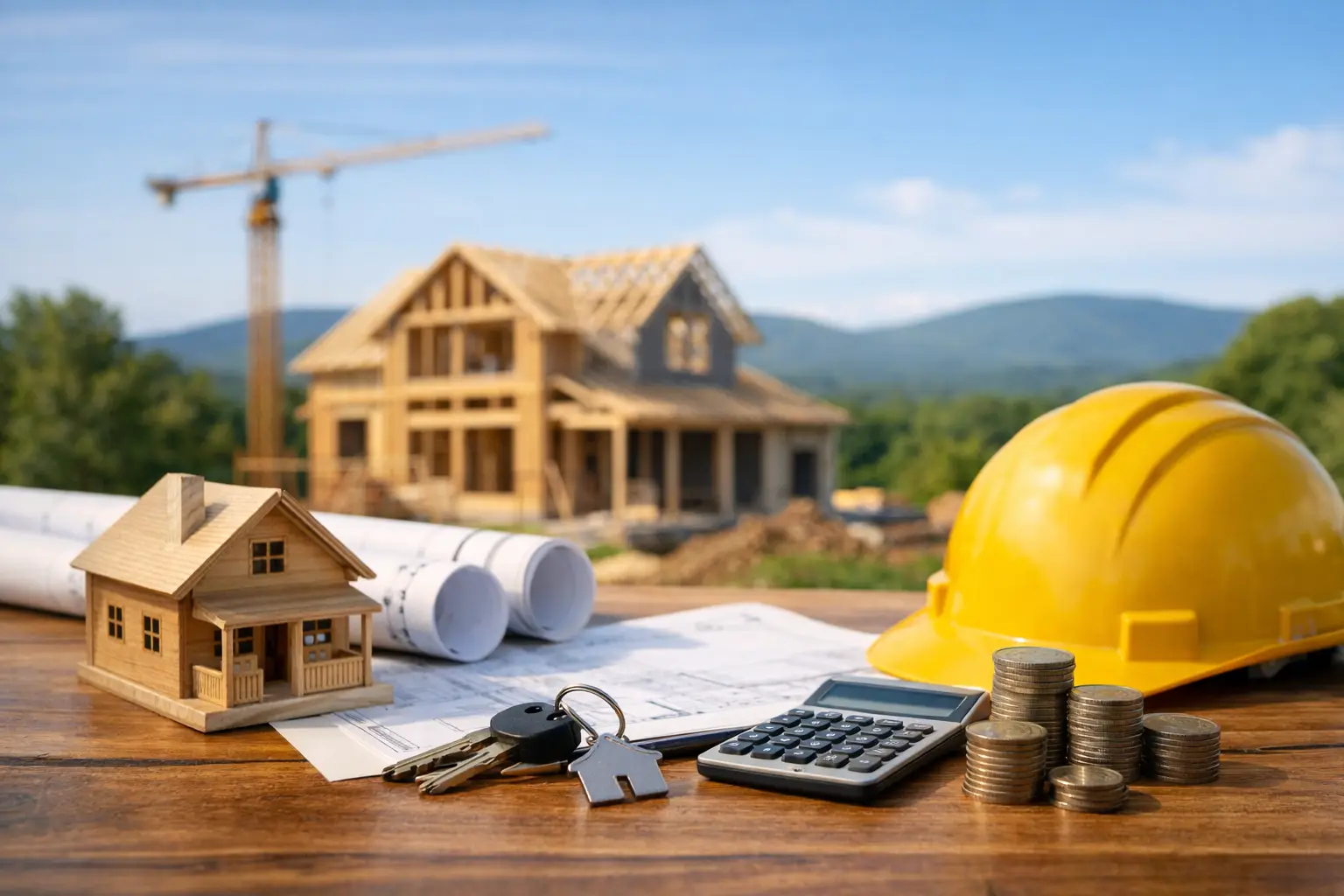
Building a home in this market is different from buying one that is already standing. You are not just comparing rates and payment options. You are also thinking about lot timing, builder contracts, draw schedules, appraisals based on plans, and whether your financing will still fit once the project moves from paper to lumber. If you are researching a construction loan Charlottesville VA buyers can actually use with confidence, the first thing to know is that the process is more detailed than a standard purchase loan, but it does not have to feel overwhelming when you have the right guidance.
How does a construction loan in Charlottesville VA work?
A construction loan is designed to finance the building phase of a home rather than the purchase of a completed property. Instead of releasing all funds at closing, the lender typically disburses money in stages as construction progresses. These are often called draws, and they line up with milestones like site work, framing, mechanical systems, and final completion.
That structure matters because the lender is evaluating more than your income and credit. They are also reviewing the plans, specs, budget, timeline, builder credentials, and the future value of the finished home. In a place like Albemarle County, where lot characteristics, grading, septic questions, and custom home plans can vary quite a bit, those details are not small side notes. They can affect timelines, approval conditions, and even how much flexibility you need in your budget.
Many borrowers also want to know whether they will have one closing or two. The answer depends on the loan structure. Some construction loans convert into a permanent mortgage after the home is complete, while others require a separate refinance or end loan. Neither approach is automatically better. A one-time-close option can reduce repeated closing costs and simplify the process. A two-time-close structure may give more flexibility in certain situations, especially if market conditions or borrower plans are likely to change before completion.
Who should consider a construction loan Charlottesville VA option?
A construction loan makes sense for buyers who cannot find the right existing home, want to build on owned land, or need a home designed around specific lifestyle needs. That includes growing families, move-up buyers, retirees building a long-term home, and buyers who have found a lot but not a finished property that checks the right boxes.
It can also be a practical path for borrowers who have spent months watching limited inventory without finding a good fit. In parts of the Charlottesville area, existing housing stock may not offer the floor plan, acreage, or location a buyer wants. Building can solve that problem, but it introduces new financing questions that do not come up in a standard resale purchase.
The trade-off is time and complexity. Building usually takes longer than closing on an existing home, and cost overruns are always a possibility. That does not mean construction financing is risky by default. It means you want realistic expectations from the beginning.
What do lenders look at for a construction loan?
Most of the same basics still apply. Your credit profile, debt-to-income ratio, available assets, down payment, employment or income stability, and overall borrowing strength all matter. But construction lending adds another layer. The lender is also evaluating the project itself.
That typically includes the builder contract, detailed cost breakdown, floor plans, specifications, permits if available, and an appraisal based on the proposed completed home. If you already own the lot, that can help your position because the land may count toward your overall equity contribution. If you are buying the lot as part of the project, the timing and structure need to be reviewed carefully.
Builder approval is another major factor. Lenders generally want to see that the builder is licensed, insured, experienced, and financially stable enough to complete the project. For custom builds, this is especially important. A great floor plan on paper is not enough if the lender has concerns about execution.
What costs should you plan for beyond the build price?
This is where many borrowers get tripped up. They focus on the headline construction contract and forget the side costs that can change the full cash needed. Land preparation, utility connections, permits, septic or well work, driveway installation, contingency reserves, and interest reserves can all affect the total financing picture.
Charlottesville-area builds can vary widely depending on whether the lot is in a more established neighborhood, a rural setting, or a site with topography that requires added engineering or site work. A relatively straightforward build on one parcel may look very different from another just a few miles away.
That is why a clean preapproval matters. It is not just about finding out the maximum number you can borrow. It is about pressure-testing the project before you are too far down the path. A payment that looks comfortable on the base contract can become less comfortable once all-in costs are included.
Is it harder to qualify for a construction loan than a regular mortgage?
Usually, yes, but harder does not mean out of reach. Construction loans often require stronger documentation and more review because there is more moving parts. The lender is taking on project risk during the build phase, not just property risk on a completed home.
Borrowers with solid credit, steady income, cash reserves, and a clear project plan are generally in a better position. Self-employed borrowers may still qualify, but they often need more careful income analysis. If your finances are strong but not perfectly straightforward, working with a mortgage advisor who can look at multiple loan paths can make a real difference.
This is also where local knowledge helps. National call-center lenders may offer construction products, but they do not always offer hands-on guidance tailored to local builders, local timelines, and the way projects actually unfold here. A broker who knows the area can often spot issues earlier, whether that is a builder approval question, a land valuation concern, or a budget line item that deserves a second look.
How long does the process take?
Construction financing usually takes longer to set up than a standard purchase mortgage because the lender is underwriting both the borrower and the project. If plans and contracts are complete and the builder is ready with documentation, the process can move more smoothly. If the project details are still shifting, delays are more likely.
That does not mean you need every single decision finalized before you start the conversation. It does mean the earlier you talk through your financing options, the better. A lot of borrowers wait until they are emotionally committed to a lot or a builder before asking whether the numbers truly work. That is backwards. It is much easier to make smart choices when financing is part of the planning stage.
Should you shop construction lenders differently than regular mortgage lenders?
Absolutely. Rate matters, but it is not the only variable. With construction loans, process matters just as much. You want to understand how draws are handled, how builder approvals work, what happens if the timeline changes, how interest is charged during construction, and whether the permanent financing is locked in now or later.
This is one area where the cheapest quote is not always the best fit. If a lender has poor communication, limited flexibility, or weak experience with more involved files, a slightly lower rate can become expensive in other ways. Delays, confusion, and poor expectations management are costly during a build.
That is one reason many borrowers prefer an independent local broker over a large national lender. A broker can often compare options across lenders while still giving the kind of direct guidance borrowers actually need. For homebuyers building in this area, that local perspective can be just as valuable as the pricing conversation.
Common questions about construction loan Charlottesville VA financing
One common question is whether you can use land you already own as your down payment. In many cases, yes, depending on value, equity, and loan structure. Another is whether change orders are allowed after closing. Sometimes they are, but they usually need careful review because cost changes can affect the budget and approval.
Borrowers also ask whether construction loan payments are higher during the build. Often, during construction, you may pay interest only on the funds that have been drawn rather than on the full loan amount. Once the home is complete and the loan converts or is refinanced into permanent financing, your full mortgage payment begins.
And then there is the question almost everyone asks at some point – is building worth it? It depends on your goals. If speed and certainty are your top priorities, buying an existing home may be the simpler path. If location, layout, and long-term fit matter more, construction can be the better choice even with the extra complexity.
A construction loan is not just financing for a house. It is financing for a plan that has to hold together from lot to final inspection. When that plan is realistic and the guidance is local, the process feels less like guesswork and more like a smart next step. If you are considering building here, a conversation with a Charlottesville mortgage partner like Cavalier Mortgage can help you sort out what is possible before the first shovel hits the ground.