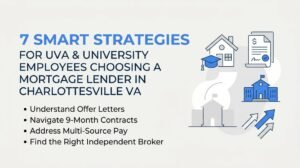

A low rate can catch your eye, but the wrong mortgage broker can cost you far more in delays, confusion, and a loan that does not really fit your goals. If you are wondering how to choose mortgage broker support that actually makes buying or refinancing easier, the answer is not just who quotes the lowest number first. It is who can explain your options clearly, move with urgency, and help you make a smart decision for your life in Charlottesville.
Mortgage shopping feels personal because it is personal. You are not only comparing interest rates. You are choosing who will guide you through credit questions, income documentation, underwriting issues, and closing timelines that can affect whether you get the home you want. In a market where timing and local relationships matter, the broker you choose can shape the whole experience.
What a mortgage broker should actually do
A good mortgage broker is more than a middleman. They should learn your goals, review your financial picture, match you with loan options that fit, and stay involved from pre-approval through closing. That matters whether you are a first-time buyer, a move-up buyer, an investor, or a homeowner trying to refinance without getting lost in the fine print.
The best brokers also know when the obvious loan is not the best loan. A borrower with strong credit and steady W-2 income may fit nicely into conventional financing. A veteran may benefit more from a VA loan. A buyer outside the city core may have USDA options. A self-employed borrower may need bank statement or non-QM solutions instead of trying to squeeze into a program that was never designed for their income profile.
That is why the first question is not, who has the flashiest ad. It is, who can think through your situation with you.
How to choose mortgage broker in Charlottesville
Start with local fit. Charlottesville is not a generic mortgage market. Buyers here may be balancing competition near UVA, looking for more space in Albemarle County, purchasing a renovation project, or buying an investment property with different cash flow goals. A broker who understands the area can often give better guidance on timeline expectations, appraisal realities, and the practical differences between neighborhoods and surrounding communities.
Local knowledge should show up in the conversation. If a broker talks only in broad national terms, that is a sign they may be working from a script. If they ask where you are looking, how quickly you need to move, whether you expect seller competition, and what kind of property you are considering, that is usually a better sign. Mortgage advice works best when it is grounded in the market you are actually shopping.
Look beyond the rate quote
Almost every borrower starts with rates, and that is reasonable. But a rate by itself tells you very little. You need to know the annual percentage rate, lender fees, discount points, estimated cash to close, and whether the quote is based on a realistic version of your file.
Some brokers quote aggressively upfront, then the details change once documents come in. Others may offer a slightly higher rate with lower fees, which can be the better deal depending on how long you plan to keep the loan. If you are buying a starter home and may move in five years, paying points for a tiny rate improvement may not make sense. If this is your long-term home, it might.
A trustworthy broker will walk you through the trade-offs instead of pushing one number and hoping you do not ask questions.
Ask about loan options, not just approval
One of the clearest signs of a strong broker is range. If they only talk about one or two products, that can limit you. A better broker can explain why conventional, FHA, VA, USDA, jumbo, renovation, HELOC, DSCR, or non-QM financing may or may not fit your situation.
That does not mean more options are always better. Too many choices without guidance can become noise. What you want is a broker who can narrow the field with confidence and explain why. For example, an FHA loan may help a buyer with a lower credit score or smaller down payment, but conventional financing may reduce long-term mortgage insurance costs for someone with stronger credit. A self-employed borrower may qualify more comfortably with alternative documentation instead of forcing a standard underwriting path.
The key is whether the broker explains the why in plain English.
Questions worth asking in the first conversation
Ask how they get paid and whether broker compensation changes by loan product. Ask how many lenders they work with and whether they regularly help borrowers like you. Ask what challenges they see in your file now, not after you are under contract. Ask how quickly they can issue a pre-approval and how available they are when a real estate agent needs numbers updated on a weekend.
You should also ask what happens if the first loan structure does not work. A seasoned broker will have a backup plan. That matters more than people realize.
Service matters more than most borrowers expect
A mortgage is part numbers and part communication. The communication side gets overlooked until something goes wrong.
A good broker responds quickly, explains documents without making you feel behind, and keeps the process moving before small issues become closing problems. This is especially important in competitive purchase situations. Sellers and listing agents notice when a financing team seems organized and proactive. In some cases, the right local mortgage partner can help your offer feel stronger because the people involved trust the loan will close.
Pay attention to how the broker handles early conversations. Are they patient? Do they answer directly? Do they explain next steps clearly? If you already feel rushed, confused, or passed around, that usually does not improve once underwriting begins.
Reviews help, but context matters
Online reviews can be useful, but read them with a little judgment. A five-star review that says only great service is less helpful than one that mentions responsiveness, problem-solving, or help with a specific borrower type. Look for patterns. Do clients mention first-time buyers feeling supported? Do self-employed borrowers say the broker found a solution others missed? Do Realtors mention reliability and smooth closings?
It is also fair to compare independent brokers with larger retail lenders or national brands. Big lenders may offer convenience and broad name recognition, but they can also feel more standardized. An independent broker often has more flexibility to shop multiple lenders and tailor the loan structure. That can be especially helpful when your income, property type, or timeline is not perfectly straightforward.
The best broker for you may depend on your borrower profile
There is no single best broker for every borrower. A first-time homebuyer often needs education, patience, and clear expectations. A move-up buyer may need help aligning a new purchase with the sale of a current home. An investor may care most about speed, leverage, and property cash flow. A self-employed borrower usually needs a broker who understands documentation strategy before the file ever reaches underwriting.
That is why experience with your type of loan matters. If you are using a VA loan, ask how often they close VA financing. If you are buying in a rural area, ask whether they regularly handle USDA loans. If you are exploring a bank statement or DSCR loan, ask for a realistic explanation of rates, reserves, and documentation. Specific experience often matters more than broad claims.
Red flags to watch for
A broker should never make you feel like basic questions are annoying. They should not avoid discussing fees, pressure you to lock immediately without context, or promise approval before reviewing your documents. Be cautious if someone cannot explain why they recommend a certain loan, or if every answer sounds like a sales pitch.
Another red flag is poor expectation setting. Mortgage files can hit bumps. That is normal. The issue is not whether challenges exist. It is whether your broker sees them early, explains them honestly, and gives you a path forward.
What good mortgage guidance feels like
When you have the right broker, the process feels clearer. You understand your options, your numbers, and your next step. You know who to call. You feel prepared instead of managed.
That is usually the difference between a transactional lender and a real local advisor. In Charlottesville, where buyers range from first-timers to seasoned investors, that kind of guidance can make a real difference. A firm like Cavalier Mortgage stands out when it combines broad loan access with the kind of local, one-on-one support borrowers remember long after closing.
Choosing a mortgage broker is not about finding the loudest promise. It is about finding someone who can earn your trust, explain the trade-offs, and help you move forward with confidence when the stakes feel high.