

Foreign nationals buying near UVA, in Albemarle County, Crozet, Waynesboro, or Staunton work under different underwriting rules than U.S. citizens. You may have no U.S. credit file, income documented abroad, and a tight market that rewards buyers who show up fully prepared. The common belief that you need a Social Security number, a FICO score, or a cash purchase is wrong in many cases. Foreign national home loan options are a matching problem, not a yes-or-no problem, and the match depends on your visa, your income, and your purpose for the property. These seven strategies show how I structure those loans as an independent broker shopping 500+ wholesale lenders.
By Duane Buziak, NMLS #1110647
1. Match the Loan to Your Visa or Non-Resident Category
Status decides which program families are even available, so it comes before any house-hunting. A foreign national or non-resident borrower lives outside the U.S. and has no U.S. credit or income. A work-visa holder lives and earns here. An ITIN loan serves borrowers who file taxes with an Individual Taxpayer Identification Number instead of a Social Security number. Each group lands in a different program family.
For example, imagine a visiting UVA researcher on an H-1B with two years of U.S. pay stubs. That borrower may qualify for conventional financing, which carries the best pricing. Now imagine an overseas parent buying a Charlottesville home for a student, with no U.S. ties. That buyer likely needs a foreign national program. FHA requires lawful residency and a Social Security number under the HUD Single Family Housing Handbook 4000.1, and USDA loans are limited to citizens and qualified aliens, so those paths close for some profiles and stay open for others.
To put this into practice:
- List your visa type, years in the U.S., and U.S. income.
- Note your SSN or ITIN status and whether you will occupy the home, rent it, or hold it for family.
- Send the list to me before you tour homes, and I will map every program you fit.
The common mistake is assuming every foreign national is stuck in the same expensive program, or applying to a retail lender that offers only one path. Measure the number of viable programs identified, plus the rate and down payment spread between them. That spread is what you are shopping.
2. Build Qualifying Credit Without a U.S. Score
Underwriters need evidence that you pay what you owe. A FICO score is one way to show it, not the only way. Non-traditional documentation works because a 12-month record of rent, utilities, and insurance payments predicts repayment behavior, which is exactly what a score estimates.
For example, imagine a buyer with no FICO who supplies 12 months of rent receipts, utility and insurance payments, and a foreign credit report. Many wholesale programs accept that package in place of a U.S. score. If you already have a U.S. file, I can run a soft credit pull mortgage review through NoTouch Credit Pull, so your score is not dinged while we compare programs.
Your checklist:
- Passport and visa documents
- A foreign credit report, officially issued and translated if needed
- Twelve months of payment records for rent, utilities, and insurance
- A soft-pull review if a U.S. file exists
Two mistakes cause most damage. The first is opening several U.S. credit cards right before applying, which creates inquiries and new accounts without any history. The second is submitting unofficial or untranslated credit documents, which underwriters reject on sight. Measure success by whether the selected wholesale lender’s pre-underwriting review accepts your documents on the first pass. For background on how credit works in a mortgage file, the CFPB’s Owning a Home tools are a solid reference.
3. Use a Foreign National Program With a Larger Down Payment
Non-resident programs trade flexible documentation for more of your cash. Because the broker-side risk of lending to a borrower with no U.S. footprint is higher, these programs require a bigger down payment, a rate premium, and verified reserves, meaning months of housing payments left in the bank after closing. Exact minimums vary by wholesale lender and change often, so confirm them for your scenario as of November 2026.
Here is a labelled illustration, not a quote. Suppose you buy a $650,000 Albemarle County home with 30% down:
- Down payment: $650,000 x 0.30 = $195,000
- Loan amount: $455,000
- Assumed rate: 7.5% fixed for 30 years
- Principal and interest: about $3,181 per month
Add property taxes, insurance, and reserves of, say, six months of payments, and the cash you need grows well past the down payment alone. The loan itself sits below the 2026 baseline conforming limit of $832,750 published by FHFA, so jumbo pricing is not the issue here. Above that limit, as many Charlottesville purchases are, jumbo underwriting adds its own reserve requirements.
Steps:
- Confirm the program’s down payment minimum and reserve rules.
- Move funds into a U.S. account early.
- Obtain a written scenario review before you make an offer.
The classic mistake is planning for 20% down from conventional rules and discovering the program wants more. Measure total cash to close plus reserves against your available seasoned funds. If the gap is negative, adjust the price range before you shop, not after.
4. Qualify on the Property With a DSCR Loan
A DSCR (debt service coverage ratio) loan qualifies the property, not you. The underwriter divides the rental income by the full housing payment, known as PITIA: principal, interest, taxes, insurance, and association dues. Because personal income is not the test, you avoid documenting foreign pay entirely. This fits investors buying rentals near Grounds, in Crozet, or in the Staunton and Waynesboro markets.
For example, imagine a UVA-area rental that rents for $3,200 a month with a $2,800 PITIA. The DSCR is $3,200 divided by $2,800, or 1.14. Many programs want 1.0 or higher, and a stronger ratio generally earns better pricing, though thresholds vary by wholesale source.
To run it yourself:
- Get a rent estimate or signed lease.
- Compute PITIA using real Albemarle County tax and insurance figures, not guesses.
- Request pricing from several wholesale sources, since DSCR terms differ widely.
Three things get ignored and cost money. Prepayment penalties can make an early sale or refinance expensive. Short-term rental plans need to be checked against Albemarle County and Charlottesville zoning rules before you count Airbnb-style income. And vacancy belongs in your cash flow math even when the lender’s formula ignores it. Measure two numbers: DSCR at or above the program minimum, and positive monthly cash flow after reserves.
5. Document Income With Bank Statement and Asset Depletion Programs
When tax returns and pay stubs are impractical, deposits and liquid assets can establish income instead. A bank statement program averages business or personal deposits over 12 to 24 months and applies an expense factor. Asset depletion divides eligible liquid assets by a set number of months to create qualifying monthly income. Both are non-QM tools built for international business owners and relocating families.
For example, imagine an international business owner with 24 months of statements. The file qualifies through an expense-factor calculation instead of U.S. tax returns. A family relocating for a UVA appointment with a large brokerage balance but a pending start date might fit asset depletion better.
Preparation matters more than the method:
- Gather 12 to 24 months of statements, with certified translations for any non-English documents.
- For asset depletion, gather statements showing the liquid assets.
- Have your broker run both methods against the same target payment.
The mistake to avoid is moving large sums between accounts right before applying. Every unexplained transfer triggers sourcing questions, and each question adds days. Measure the qualifying monthly income each method produces against the payment you want. One method often wins by a wide margin, and you will not know which until both are calculated.
6. Source and Season Your Funds Early
Seasoning means funds have sat in your account long enough to be treated as yours, and sourcing means you can show where they came from. Underwriters demand both for international wires, gift funds, and currency conversions. This is the item that takes longest, so it controls your timeline more than anything else on the list.
For example, imagine a buyer who wires funds from overseas four weeks before making an offer, keeps every transfer receipt, and arrives at closing without a documentation hold. A second buyer wires the same amount three days before closing and waits two weeks while the underwriter traces the money.
Practical steps:
- Transfer funds into a U.S. account in your own name.
- Keep every wire confirmation and the matching statements.
- For gifts, get a gift letter and proof of the donor’s ability to give.
- Plan for exchange-rate movement, because a weaker home currency can shrink your down payment between wiring and closing.
Two errors raise red flags: splitting a large transfer into many small deposits, and using a third party’s account. Both look like concealment even when they are innocent. Measure the days between your first transfer and fully documented, underwriter-cleared funds. If that number is longer than your typical offer-to-close window, start sooner.
7. Compare Wholesale Broker Access Against Single-Lender Retail
A retail loan officer works inside one institution’s product set, rate structure, and underwriting guidelines. For a clean conventional loan, that can be adequate. For a foreign national, DSCR, bank statement, or non-QM profile, access is the differentiator. As an independent broker, I shop 500+ wholesale lenders at once, so an unusual profile finds the program that fits it instead of being forced into one company’s box.
Here is how Cavalier Mortgage by Duane Buziak compares with Jenna Stiltner at Atlantic Coast Mortgage. Items marked “confirm directly” are not verified here, and you should ask for them in writing.
| Factor | Cavalier Mortgage by Duane Buziak | Jenna Stiltner, Atlantic Coast Mortgage |
|---|---|---|
| Lender access | Independent broker shopping 500+ wholesale lenders at once | Retail loan officer working within one company’s guidelines |
| Program range | Conventional, FHA, VA, USDA, jumbo, DSCR, non-QM, bank statement, asset depletion, ITIN and foreign national | Confirm directly which foreign national, DSCR, and non-QM products are offered |
| Soft-pull pre-approval | Yes, through NoTouch Credit Pull | Confirm directly |
| Availability | 24/7 | Confirm directly |
| Reviews | 1,400+ five-star reviews across Google, Experience.com, Zillow, and Facebook | Confirm directly on her public profiles |
| Credentials | VA Broker of the Year 2024 and 2025, Scotsman Guide Top Originator 2025 and 2026, solo producer on one NMLS number | NMLS #907344, ACM NMLS #643114 |
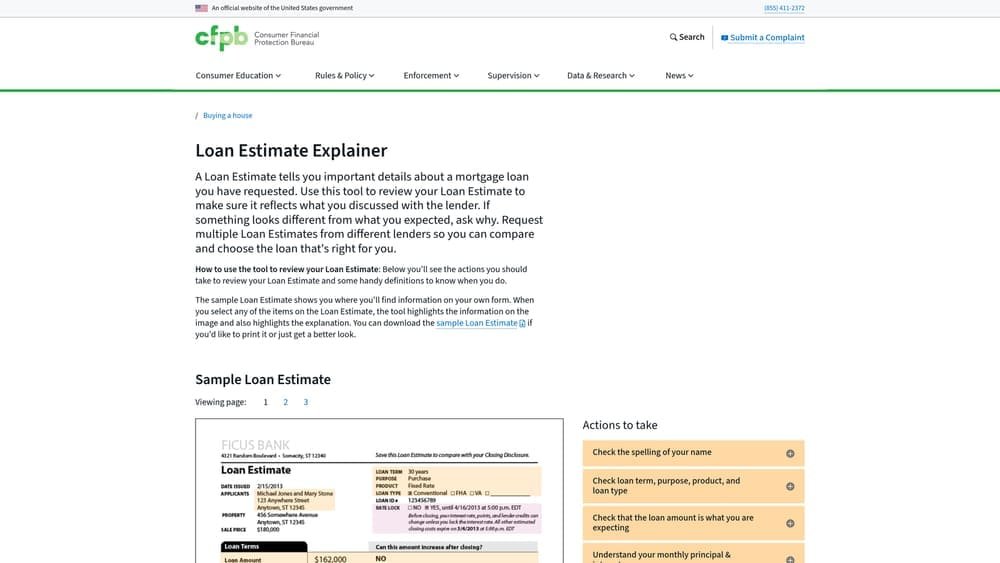
To compare fairly, request written scenario quotes from me and from any retail competitor. Put rate, down payment, reserves, and fees side by side on the same basis. The common mistake is comparing only the advertised rate. A lower rate with higher reserves and points can cost more over time. Measure total cost of ownership across the first five years, including rate, points, and fees. A CFPB Loan Estimate makes that comparison standardized.
Order of Operations: Status, Credit, Funds, Then the Call
Start with strategies 1 and 2. Confirm your status and your credit path, because they decide which programs exist for you. Begin strategy 6 immediately, since fund sourcing and seasoning take the longest and cannot be rushed once you have an offer. Strategies 3 through 5 then fall into place based on whether you are buying to live in the home or to rent it. After that, call me at 434-443-7028 for a mortgage pre approval without hard pull, and I will give you the program match in writing.
Whether you’re a first-time buyer, UVA faculty member, or exploring non-traditional loan options, Duane Buziak and Cavalier Mortgage deliver broker-superior solutions 24/7, shopping 500+ wholesale lenders to secure terms retail banks simply can’t match. Get your personalized rate quote now and discover why over 1,400 five-star reviews have made us Virginia’s consecutive VA Broker of the Year.



