
A $450,000 Charlottesville purchase with 10% down means a $405,000 conventional loan. At a 6.50% illustrative 30-year fixed rate, principal and interest is about $2,560 per month. At 6.75%, it rises to about $2,628 – a $68 monthly difference and roughly $4,080 over five years before considering the faster principal reduction at the lower rate. That is why a conventional loan Charlottesville buyers choose should be priced around the full scenario, not just a headline rate.
For a buyer balancing a UVA-area commute, school preferences, and a competitive offer, conventional financing is often the most adaptable path. It can work with 3% to 20% or more down, a primary home, a second home, or an investment property. The right structure still depends on credit, assets, occupancy, debt-to-income ratio, and the property itself.
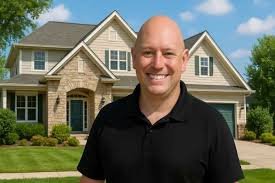
By Duane Buziak, NMLS #1110647
Table of Contents
- Why conventional financing fits Charlottesville
- Local prices, limits, and competition
- Down payment, credit, and reserves
- Broker access versus a single-shelf option
- A worked cost example
- When another loan program may fit better
- Soft-pull prequalification
- Frequently asked questions
Why a conventional loan fits Charlottesville buyers
Charlottesville is not one housing market. A renovated home near Belmont, a newer property in Crozet, and an acreage purchase outside Earlysville can each call for different underwriting conversations. Conventional loans are popular because they offer broad property eligibility, fixed-rate and adjustable-rate choices, and the option to remove private mortgage insurance when equity and program rules allow.
For many buyers, the appeal is control. A household with strong income and a 740-plus FICO score may prioritize lower monthly mortgage insurance and pricing flexibility. A first-time buyer with limited cash may instead look at a 3% or 5% down conventional option. Neither path is automatically better. The monthly payment, cash remaining after closing, and likelihood of winning the home matter together.
Conventional financing is also a practical fit for many UVA faculty, staff, graduate households, and professionals relocating to Albemarle County. Some need a condo close to campus; others need room for a growing family and accept a longer drive from Pantops or Hollymead. A local broker can sort through those trade-offs before an offer deadline creates pressure.
Charlottesville and Albemarle numbers that shape your plan
Market conditions remain competitive when a well-priced home has limited direct substitutes. Inventory can vary sharply by neighborhood and price band, so buyers should expect that a clean prequalification and a realistic closing timeline may strengthen an offer. In Albemarle County, Redfin reported a median sale price of approximately $535,000 in June 2026. See the local market data at https://www.redfin.com/county/2857/VA/Albemarle-County/housing-market.
That figure makes loan-size planning especially relevant. The 2026 baseline conforming loan limit for a one-unit property is $832,750, well above many local purchase prices, according to the https://www.fhfa.gov/data/conforming-loan-limit/cll-historical-data. A buyer purchasing at $535,000 with 10% down would have a $481,500 loan amount, comfortably within that baseline limit.
Closing costs commonly land around 2% to 5% of the purchase price, depending on title work, escrows, discount points, insurance, and negotiated seller contributions. On a $450,000 purchase, that is roughly $9,000 to $22,500 before any seller credit. Ask about our no-out-of-pocket closing options when the offer terms and property value support that structure. In any title-cost comparison, my preferred title company can save an additional $2,000 on average, which can materially reduce total cash needed to close.
Credit, down payment, and reserves
A 620 FICO score is a common conventional starting point, but approval is not the same as best available pricing. Scores around 680 can broaden choices, while 740 and above often improves pricing and mortgage insurance options. Credit history, revolving utilization, late payments, debt ratio, and the amount of cash left after closing can all change the result.
A 3% down option may fit a qualified first-time buyer, while 5%, 10%, and 20% down each shift payment and mortgage-insurance math. Twenty percent down can eliminate monthly private mortgage insurance on many conventional loans, but it is not automatically wise to drain savings just to reach that number. Preserving emergency reserves may be more valuable for a household buying an older Charlottesville home with expected repairs.
Reserve requirements also vary. A straightforward primary-residence file may require no additional reserves beyond funds to close, while a second home, investment property, or more complex profile can require two to six months of total housing payments in verified reserves. For a $3,200 total monthly housing payment, two months equals $6,400 and six months equals $19,200. Those funds do not always need to be spent, but they must be documented when required.
Broker access versus a single-shelf option
A conventional mortgage is not a commodity when credit, occupancy, property type, and timing differ. A broker evaluates available program options and pricing rather than placing every borrower into one internal menu. The comparison below is structural, not a promise that every borrower will qualify for every option.
| Dimension | Mortgage broker approach | Single-shelf mortgage option |
|---|---|---|
| Lender access | Can compare multiple wholesale program sources for an eligible file. | Uses the programs and pricing available within one organization. |
| FICO floors | May identify different eligible overlays and pricing tiers across sources. | Uses one organization’s credit overlays and approval standards. |
| Program breadth | Can review conventional, FHA, VA, USDA, jumbo, DSCR, non-QM, bank statement, construction, 203k, foreign national, and commercial options. | Program availability is limited to that organization’s approved shelf. |
| Pricing flexibility | Allows a comparison of rate, points, credits, mortgage insurance, and payment structure. | Pricing is based on one organization’s available offerings. |
| Credit review | Soft-pull prequalification may be available before a hard inquiry. | Credit-review process depends on that organization’s workflow. |
Worked example: rate, fees, payment, and five-year impact
Return to the $450,000 home with $45,000 down and a $405,000 loan. Assume a 6.50% 30-year fixed rate, a 1.00% discount-point cost of $4,050, and estimated monthly private mortgage insurance of $152. Principal and interest is $2,560, so the mortgage payment before property taxes and homeowners insurance is $2,712 per month.
Now compare it with the 6.75% illustration at $2,628 principal and interest. The lower-rate option saves $68 monthly in principal and interest, or $4,080 over 60 months. The $4,050 point cost is nearly offset by that five-year payment difference, before accounting for the lower remaining balance created by the lower rate. This is not a recommendation to pay points. If the buyer expects to sell, refinance, or move sooner, the higher-rate, lower-fee option may be smarter.
Add the average $2,000 savings available through my preferred title company to the cost conversation. In this example, it could reduce the $4,050 point cost to an effective $2,050 difference in total cash planning, assuming the title quote and transaction are eligible. Every quote should show the rate, points, third-party fees, lender credits, title charges, and cash-to-close estimate side by side.
When conventional is not the best fit
Conventional loans are strong, but they are not the only answer. FHA may deserve a look when credit or down payment constraints make conventional mortgage insurance less favorable. VA financing can be exceptionally compelling for eligible veterans and service members, particularly when preserving cash is a priority. USDA may fit qualifying rural areas around the Charlottesville region. Jumbo financing can become relevant above conforming limits, while bank statement, DSCR, and other non-QM options may serve self-employed borrowers and investors whose tax returns do not tell the whole income story.
The goal is not to force every buyer into conventional financing. The goal is to compare the payment, cash required, documentation, and long-term flexibility before choosing.
Start with a soft credit pull mortgage review
A soft credit pull mortgage review can help you understand score range, liabilities, and possible loan paths without an initial hard inquiry. For buyers asking about no hard inquiry mortgage pre approval, mortgage pre approval without hard pull, or a no credit hit mortgage application, the accurate distinction matters: a soft pull can support an early prequalification, while a full application or final approval process may require a hard inquiry later.
That early review is useful before touring homes in Fry’s Spring, Keswick, or North Downtown. It gives time to address documentation questions, adjust a down payment target, or compare whether conventional, FHA, VA, or another program produces the better overall outcome. A soft pull mortgage broker conversation should be specific enough to guide an offer, while remaining honest about what still must be verified.
Frequently Asked Questions
1. What is the minimum down payment for a conventional loan in Charlottesville?
Qualified first-time buyers may have 3% down options. Many other conventional purchases begin at 5% down, while larger down payments can reduce monthly mortgage insurance or remove it at 20% down.
2. What credit score is needed for a conventional loan?
A 620 FICO score is a common minimum, but stronger scores can improve approval options, pricing, and mortgage-insurance costs.
3. What is the 2026 conforming loan limit in Albemarle County?
The one-unit baseline conforming limit is $832,750 for 2026. Loan limits and property classification should be confirmed for the specific address and transaction.
4. Can I get prequalified without a hard credit inquiry?
Yes. Cavalier Mortgage offers a NoTouch Credit Pull option for an early soft-pull review. A hard inquiry may still be required later for formal underwriting.
5. Are conventional loans good for UVA-area buyers?
Often, yes. They can work well for condos, townhomes, and single-family homes, but condo eligibility, reserves, and occupancy should be reviewed early.
6. How much are closing costs on a Charlottesville conventional loan?
A useful planning range is 2% to 5% of the purchase price, though seller credits, points, escrows, and title charges can move the final figure.
7. Can self-employed buyers use a conventional loan?
Yes, when documented income meets guidelines. If tax-return income is restrictive, bank statement or other non-QM options may also be worth comparing.
8. How quickly can a conventional loan close?
Timing depends on appraisal, title, documentation, and underwriting conditions. Starting the credit and document review before making an offer helps protect the closing schedule.
Legal disclaimer: Mortgage programs, rates, fees, loan limits, property eligibility, mortgage insurance, and approval requirements are subject to change without notice. Illustrations are estimates only and are not a loan offer, commitment to lend, or guarantee of savings. All loans are subject to credit approval, underwriting, appraisal, title review, and applicable program guidelines. Consult a qualified tax, legal, and financial professional for advice specific to your situation.
A clear plan before your next showing can turn a rushed financing decision into a confident offer strategy.
Duane Buziak | Mortgage Maestro | NMLS #1110647 | Coast2Coast Mortgage, LLC NMLS #376205 | Licensed in VA, FL, TN, GA & DC [Contact] | NoTouch Credit Pull available — no hard inquiry, no credit hit.