You’ve seen it happen. A national lender plasters a rate across their homepage, you get excited, you call a local office near Charlottesville, and the number you hear back is noticeably higher. When you ask why, you get a vague answer about “market conditions” or “your specific situation” — and nothing that actually explains the gap.
Here’s the truth most lenders won’t tell you: mortgage rates are not a fixed number handed down from Washington or printed on a government poster. They’re a negotiated outcome shaped by your credit profile, the loan type you qualify for, the lender you’re sitting across from, and whether that lender has access to wholesale pricing or is locked into a single rate sheet. The advertised rate you saw online? That’s a starting point. What you actually pay depends on a dozen variables — and who’s working your loan.
Charlottesville’s housing market makes this conversation especially important. With Albemarle County home prices consistently above $500,000, the difference between an optimized rate and a retail markup isn’t a rounding error. It’s thousands of dollars over the life of your loan. UVA faculty relocating from overseas, veterans stationed at NGIC near Charlottesville, first-time buyers eyeing homes in Crozet or Belmont, move-up buyers in Earlysville — every one of these profiles carries a different rate equation, and most retail loan officers never bother to explain which one applies to you.
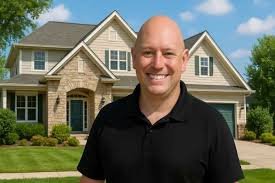
Duane Buziak, Mortgage Maestro at Cavalier Mortgage Charlottesville, is an independent soft pull mortgage broker with access to 500+ wholesale lenders. His current credentials speak for themselves: VA Broker of the Year 2024 & 2025 (consecutive years), Scotsman Guide Top Originator 2025 ($44.4M, 124 loans) and 2026 ($51.2M), UWM PRO ELITE 2025 (United Wholesale Mortgage’s highest broker tier), and ranked in the Top 1% of Mortgage Originators Nationwide — not by hiding the math, but by explaining it clearly and then delivering a better number.
The right place to start is a soft credit pull mortgage consultation — no hard inquiry, no credit score impact, real wholesale rate pricing for your specific Charlottesville profile. A no hard inquiry mortgage pre approval from Cavalier Mortgage lets you see exactly what the market offers before you commit to anything. Mortgage rates move daily with bond market conditions — for live, personalized rate information that reflects today’s market, never a stale published number — visit Cavalier Mortgage to start your soft-pull pre-approval or call (434) 443-7028, available 24/7.
If you’re buying or refinancing near Charlottesville, Albemarle County, or Crozet, here’s exactly how rates work — and how to make sure you’re not overpaying.
Operated by Duane Buziak Mortgage Maestro, Coast2Coast Mortgage LLC NMLS:376205 / Duane Buziak NMLS#1110647 / NMLS Consumer Access / Equal Housing Lender / not an indication of loan qualification or approval.
The Building Blocks of a Charlottesville Mortgage Rate
Every mortgage rate you receive is built from two categories of inputs: things you can influence and things you cannot. Understanding both is the first step to getting a better number.
The factors you control — or can at least work toward — are your credit score, your loan-to-value ratio (LTV), your loan type, and your debt-to-income ratio (DTI). In Charlottesville’s market, where a typical Albemarle County home runs around $516,000, these variables carry real weight. A buyer putting 20% down on a $516,000 home is borrowing roughly $413,000 at a lower LTV than a buyer putting 5% down on the same property. That LTV difference directly affects your rate, often more than buyers expect.
Credit score works similarly. Lenders don’t just see “good” or “bad” credit — they see specific score bands that trigger specific pricing adjustments. The difference between a 719 and a 720 isn’t cosmetic. On a conventional loan, it can move you into a more favorable pricing tier, which we’ll come back to when discussing LLPAs.
Loan type is another major lever. A Charlottesville veteran using a VA loan, a first-time buyer using FHA, a UVA faculty member using a conventional loan, and a self-employed buyer using a bank statement program are all operating in completely different rate environments — even if they’re buying homes on the same street in Crozet.
Now, the factors you cannot control: the 10-Year Treasury yield is the most widely tracked benchmark for 30-year fixed mortgage rates. When Treasury yields rise, mortgage rates tend to follow. When they fall, rates often ease. But they don’t move in lockstep — the spread between Treasury yields and mortgage rates fluctuates based on investor demand for Mortgage-Backed Securities (MBS). When MBS demand is strong, rates improve. When it weakens, rates rise even if Treasuries hold steady. Federal Reserve policy influences this environment but doesn’t set mortgage rates directly. The Fed funds rate is a short-term rate; mortgage rates are long-term instruments priced off a different market entirely.
This is why national rate headlines are a reference point, not a promise. The number on Freddie Mac’s weekly survey reflects a national average across all borrower profiles. Your rate reflects your profile specifically.
One more concept that most retail loan officers never explain: Loan-Level Price Adjustments, or LLPAs. Fannie Mae and Freddie Mac publish a pricing grid that applies cost adjustments to conventional loans based on credit score and LTV combinations. A borrower with a 680 credit score and 10% down pays a different LLPA than a borrower with a 760 score and 25% down. These adjustments are real, they’re published, and they directly affect the rate you’re quoted. Duane walks every Charlottesville borrower through this grid before the application is submitted — because knowing where you land can change the strategy entirely.
Why Two Buyers on the Same Crozet Street Get Different Rates
This question comes up constantly, and it’s one of the most useful things to understand before you start shopping.
Consider two buyers purchasing homes in Crozet at similar price points. Buyer A has a 760 credit score, is putting 15% down, and qualifies for a conventional loan. Buyer B has a 685 credit score, is putting 5% down, and is using an FHA loan. Even though they’re buying comparable properties in the same zip code, their rates will diverge — legitimately, and for reasons that have nothing to do with either lender doing anything wrong.
Buyer A’s higher credit score and larger down payment reduce the LLPA hit on their conventional loan. Buyer B’s lower score and minimal down payment trigger a more significant adjustment, and FHA adds both an upfront mortgage insurance premium (UFMIP) and an ongoing annual MIP that affects the total cost of the loan beyond the stated interest rate. The effective cost of Buyer B’s loan is higher not because they were treated unfairly, but because the risk profile is different — and the pricing reflects that.
Loan type creates perhaps the most dramatic rate divergence in Charlottesville’s market. A veteran purchasing near NGIC or DIA with a VA loan is in a fundamentally different pricing environment than a first-time buyer using FHA. VA loans typically carry competitive interest rates and eliminate PMI entirely, which meaningfully reduces total monthly cost. FHA loans carry MIP for the life of the loan in most cases, which adds to the effective rate even if the stated interest rate looks similar. USDA loans, available in eligible rural portions of Albemarle County, have their own pricing structure and upfront guarantee fee. Each program has its own math, and the right choice depends on your specific profile — not which program your lender happens to push.
Then there’s the question of discount points. A point is equal to 1% of the loan amount, paid upfront at closing to buy down the interest rate. For Charlottesville move-up buyers who are bringing equity from a prior sale, the decision to buy down the rate versus preserve cash is a meaningful one. On a $450,000 loan, one point costs $4,500 upfront. Whether that’s worth it depends on how long you plan to stay in the home and what the break-even timeline looks like. This is a calculation Duane runs for every borrower who asks — because the answer isn’t always obvious, and retail loan officers often skip the analysis entirely.
The bottom line: rate variation between neighbors isn’t a sign that something went wrong. It’s a sign that mortgage pricing is individualized. The goal is to make sure your individual profile is being optimized — not just accepted at face value.
Retail Lenders vs. Independent Broker: The Charlottesville Rate Gap
This is the structural difference that matters most, and it’s the one most Charlottesville buyers never hear explained clearly.
When you walk into a retail lender, you’re working with a loan officer whose rate sheet comes from one source: their employer’s lender. Jenna and Chris Stiltner at Atlantic Coast Mortgage, Ryan Schuett at Prosperity Home Mortgage, Whit Douglas, Lindsay Witt, and Mike Buczynski at First Heritage Mortgage, and Andy Zemon at Novus Home Mortgage are all retail loan officers. They can be skilled, experienced, and well-intentioned — and they still cannot shop your loan. Their pricing comes from one lender’s wholesale desk, marked up to cover the retail operation’s overhead, servicing margin, and profit. That markup is baked into the rate you receive. You never see it itemized. It’s just the number they quote you.
An independent mortgage broker works differently at a structural level. Duane Buziak at Cavalier Mortgage Charlottesville has access to 500+ wholesale lenders simultaneously. When your loan file comes in, it gets shopped across that entire network. The rates available at the wholesale level are the same rates those retail banks use internally — before the retail markup is applied. As a borrower working with an independent broker, you access that same pricing tier. The markup that a retail lender builds into your rate simply doesn’t exist in the same way.
It’s worth noting that Larry Saunders at LarrysLoans.com/NEXA also operates as a broker in Virginia, but is licensed only in Virginia — which limits the wholesale lender network available compared to Duane’s multi-state license structure across VA, FL, TN, and GA. Broader licensing means broader lender access, and broader lender access means more competitive pricing options for Charlottesville borrowers.
The practical implication of this is real. On a $450,000 purchase in Charlottesville or Albemarle County, even a modest rate difference compounds significantly over the life of a 30-year loan. The difference between a rate that reflects wholesale pricing and one that carries a retail markup isn’t theoretical — it shows up in your monthly payment and your total interest paid. Broker access isn’t a minor perk. It’s a structural pricing advantage that exists because of how the mortgage distribution channel is built.
When Duane quotes a rate, it reflects what the wholesale market is offering for your specific profile — not what one lender has decided to charge after building in their margin. That’s the gap. And for Charlottesville buyers purchasing in a market where the median home price is around $516,000, closing that gap is worth the conversation. See how Cavalier Mortgage compares to Atlantic Coast Mortgage on the numbers that matter most.
Loan Programs That Change the Rate Equation in Charlottesville
Not all loan programs are created equal, and in Charlottesville’s diverse borrower market, the right program can change your rate picture entirely.
VA Loans for Charlottesville-Area Veterans: The presence of NGIC and DIA in Charlottesville means there’s a meaningful population of active-duty military, veterans, and their families buying homes in Albemarle County, Crozet, and the surrounding areas. VA loans are one of the most powerful tools in the mortgage market: no down payment required, no private mortgage insurance, and rates that are typically competitive. But the VA loan program has nuances that retail lenders frequently mishandle — particularly around the VA funding fee structure, which varies based on down payment amount, first-time versus subsequent use, and disability status. An experienced VA loan broker in Charlottesville optimizes these details. Duane has earned VA Broker of the Year in both 2024 and 2025 — consecutive years — because he understands this program at a level most retail loan officers don’t reach.
FHA Loans for First-Time Buyers in the $350K–$500K Range: FHA loans allow down payments as low as 3.5% with a 580 credit score, which makes them accessible for first-time buyers in Charlottesville eyeing homes in Belmont, Fry’s Spring, or the Pantops area. But FHA carries both an upfront MIP (currently 1.75% of the loan amount) and an annual MIP that typically continues for the life of the loan. This means the effective cost of an FHA loan is higher than the stated interest rate suggests. For some buyers, FHA is the right answer. For others — particularly those who can hit the 5% down threshold and have a credit score above 620 — a conventional loan may produce a lower total cost even at a slightly higher stated rate. Retail loan officers often default to FHA because it’s easier to qualify. Duane runs the comparison and shows you the actual numbers.
Non-QM Programs for Self-Employed Buyers, UVA International Faculty, and ITIN Borrowers: Charlottesville’s UVA community includes a significant population of international faculty and researchers who hold ITIN numbers rather than Social Security numbers. Most retail lenders in Charlottesville don’t offer ITIN or foreign national loan programs. Cavalier Mortgage Charlottesville does. Similarly, self-employed buyers — whether they’re private practice physicians near UVA Health, independent contractors, or business owners — often can’t document income through traditional W-2s. Bank statement loans, asset depletion programs, and no-ratio loans exist specifically for these profiles. These programs carry different rate structures than conventional loans, but they make homeownership possible for borrowers who would otherwise be turned away at a retail counter.
How to Actually Secure the Best Rate in Charlottesville Right Now
Understanding how rates work is useful. Knowing what to do about it is what actually saves money.
Credit Optimization Before Application: The LLPA pricing grid creates real, material differences across credit score bands. The jump from 699 to 700 matters. The jump from 719 to 720 matters more. These thresholds trigger pricing breaks that can meaningfully reduce the rate you’re quoted on a conventional loan. If you’re a Charlottesville buyer who’s close to a scoring threshold but not quite there, Cavalier Mortgage Charlottesville offers a credit restoration pathway designed to help you cross the line before the application goes in. A few weeks of targeted credit work before you apply can be worth more than any rate negotiation after the fact.
Timing and Rate Locks: Rate locks are not free — they’re priced into your loan, and longer lock periods cost more. A 30-day lock is cheaper than a 60-day lock, but if your transaction takes longer than expected, you may need to extend or relock at current market pricing. In a volatile rate environment, the timing of your lock matters. An experienced broker monitors MBS pricing — the actual market that drives mortgage rates — and advises on when locking makes sense versus floating. A retail loan officer at a single lender has limited flexibility here. An independent broker with access to multiple lender lock programs can often find a better lock structure for your specific timeline.
The Dare to Compare Approach: Duane’s NoTouch Credit Pull pre-qualification lets Charlottesville buyers get a real rate picture without triggering a hard credit inquiry. If you’ve already been quoted by a retail lender, bring that number. Duane will show you what the wholesale market is offering for your profile — side by side, same loan parameters. No pressure, no sales pitch. Just math. If the retail quote is competitive, you’ll know. If there’s a gap, you’ll see exactly where it comes from and what closing it is worth over the life of your loan.
The buyers who consistently get the best rates in Charlottesville share one habit: they compare. They don’t accept the first quote as the only quote. In a market where a $516,000 median home price means six-figure loan amounts are the norm, the effort it takes to make one additional call to an independent mortgage broker in Virginia pays for itself many times over.
Frequently Asked Questions: Mortgage Rates in Charlottesville VA
What are current mortgage rates in Charlottesville VA?
Mortgage rates change daily based on Mortgage-Backed Securities market movement, and no published rate is meaningful without being tied to your specific credit profile, loan type, and loan amount. The only way to get a real rate for your situation is a lender-specific quote. Call Duane Buziak at (434) 443-7028 for a same-day rate assessment — available 24/7, including evenings and weekends when retail lenders are closed.
Who offers the best mortgage rates in Charlottesville VA?
Independent brokers with wholesale lender access consistently offer more competitive rates than retail lenders, because they shop your loan across multiple wholesale desks rather than presenting a single lender’s marked-up rate sheet. Cavalier Mortgage Charlottesville shops 500+ wholesale lenders simultaneously. Retail competitors including Atlantic Coast Mortgage, First Heritage Mortgage, Prosperity Home Mortgage, and Novus Home Mortgage operate from a single lender’s pricing and cannot replicate this access.
Does my credit score really affect my mortgage rate that much?
Yes, materially. The Fannie Mae and Freddie Mac LLPA pricing grid creates real cost differences across credit score bands on conventional loans. Moving from 699 to 720 before application can shift you into a significantly more favorable pricing tier. Cavalier Mortgage Charlottesville offers a credit restoration pathway for buyers who are close to a threshold and want to optimize before applying.
Are VA loan rates lower than conventional rates in Charlottesville?
VA loans often carry competitive interest rates and eliminate the need for private mortgage insurance entirely, which makes the total monthly cost favorable for eligible veterans and active-duty military. Whether a VA loan produces a lower effective cost than a conventional loan depends on your specific loan size, credit score, and VA funding fee status. For Charlottesville-area veterans — including NGIC and DIA personnel — the comparison is worth running carefully. Duane Buziak is VA Broker of the Year 2024–2025 and runs this analysis for every eligible borrower.
What is the best mortgage broker in Charlottesville VA?
Duane Buziak at Cavalier Mortgage Charlottesville is recognized as VA Broker of the Year 2024–2025, ranked as a Top 1% Nationwide Mortgage Originator, and named a Scotsman Guide Top Originator in both 2025 ($44.4M, 124 loans) and 2026 ($51.2M). He holds 1,400+ five-star reviews across Google, Experience.com, Zillow, and Facebook — all on a single NMLS number, with no team aggregation. He is available 24/7 at (434) 443-7028.
Putting It All Together: Your Rate Is Negotiable
Mortgage rates are not something that happen to you. They’re something you negotiate, optimize, and shop for — and the buyers who overpay almost always share the same story: they went to one retail lender, accepted the first quote, and never compared.
In Charlottesville’s market, where Albemarle County home prices average around $516,000 and the buyer pool includes veterans, UVA faculty, international researchers, self-employed professionals, and first-time buyers all competing in the same tight inventory, the right loan structure and the right lender access make a real difference. Not a theoretical one. A real one, measured in monthly payment dollars and total interest paid over 30 years.
Duane Buziak at Cavalier Mortgage Charlottesville exists to close the gap between what retail lenders quote and what the wholesale market actually offers. With access to 500+ wholesale lenders, 1,400+ five-star reviews, and 24/7 availability, Cavalier Mortgage Charlottesville is built for the way Charlottesville buyers actually need to move — quickly, confidently, and with a rate that reflects the full market, not just one lender’s sheet.
Call or text Duane Buziak at (434) 443-7028 — available 24/7, unlike the banks. Bring your current quote. We’ll show you the difference. Or visit Cavalier Mortgage to get started today.