
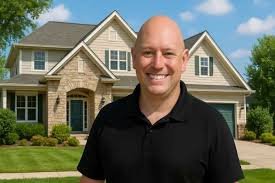
Closing costs on a Charlottesville purchase typically run roughly 2% to 5% of the price. That is a working rule of thumb from my own files, not a published statistic. At Albemarle price points, even the low end is a five-figure check. Every line on your paperwork falls into one of four buckets: broker and origination charges, third-party services, prepaids and escrows, and government fees. This mortgage closing costs breakdown walks through each bucket with local examples, shows which items are negotiable, and explains how I keep the total lean as an independent broker.
By Duane Buziak, NMLS #1110647
What Charlottesville and Albemarle Buyers Actually Pay at Closing
Percentages mislead in this market. A 3% closing cost on a $250,000 home is $7,500. On a $650,000 Crozet or Ivy-area home it is $19,500. Because UVA-driven demand keeps prices high across Charlottesville and Albemarle, the same fee schedule produces a much larger cash requirement here than in most of Virginia. Insurance premiums, property taxes, and recordation taxes all scale with price.
Two federal disclosures control how you see these numbers. Under the CFPB’s TRID rules, you receive a Loan Estimate within three business days of submitting a loan application. At least three business days before closing, you receive the Closing Disclosure, which shows final figures. Compare the two line by line. Certain charges are limited in how far they may rise between the documents, and the rest must be explained.
Local competition makes this knowledge practical. Inventory in Albemarle, Crozet, Waynesboro, and Staunton often draws multiple offers, and sellers favor buyers whose financing is clean and predictable. If you know your exact cash-to-close figure before you write the offer, you can decide how much of a seller credit to request and what you can give up elsewhere. Buyers who guess tend to either overpay on price or ask for a credit the loan program will not allow.
One data point matters for the loan structure. Albemarle County is not a designated high-cost area, so the baseline FHFA conforming loan limit applies. As of 2026, that baseline is $832,750. Loans above it are jumbo, which changes both pricing and documentation. I come back to that below.
Mortgage Closing Costs Breakdown, Line by Line: Broker, Third-Party, and Prepaid Items
The Loan Estimate organizes charges into lettered sections. Knowing what each one means tells you where you have leverage.
Sections A, B, and C: What You Pay for Services
Section A, origination charges, covers broker compensation, processing, and underwriting. This is the part tied to me and to the loan itself. Discount points also appear here. Points are prepaid interest that buys a lower rate. They are optional and a rate decision, never a required cost. Some buyers pay them, some take a higher rate, and some take a lender credit instead.
Section B lists services you cannot shop for, chiefly the appraisal, credit report, and flood certification. A Charlottesville-area appraisal commonly runs several hundred dollars, and complex or rural properties cost more. Section C lists services you can shop for, including title insurance, the settlement fee, and any survey. Your Loan Estimate gives you a written list of providers, but you may choose your own. Title is where comparison shopping pays off most.
Sections E through G: Government Fees, Prepaids, and Escrow
Section E covers taxes and recording. Virginia charges a state recordation tax on both the deed and the deed of trust (the security instrument for your loan), and localities add a portion on top. Sellers pay the separate grantor tax. Your settlement agent confirms exact amounts, but expect these to be among the largest single items on a $500,000-plus purchase.
Section F, prepaids, covers the first year of homeowners insurance and interest from your closing date to the end of that month. Section G is your initial escrow deposit, a cushion of several months of property taxes and insurance held in an account in your name. Albemarle County bills real estate tax in two installments, so the escrow cushion depends on your closing date. The rate is set annually by the county. Check the current figure at albemarle.org, because it changes with the adopted budget.
Prepaids and escrows are not fees kept by me or by anyone else. They fund your own tax and insurance obligations, and escrow surpluses are refunded. When someone says “closing costs are all broker fees,” this is the misconception to correct. Likewise, any loan marketed as free of closing costs is simply trading a credit for a higher rate. I discuss credits and pricing trade-offs openly because that is what is actually happening.
Closing Costs by Loan Program: VA, FHA, USDA, Conventional, and Jumbo
The program you choose adds its own charges on top of the standard list.
VA. The VA funding fee depends on down payment and whether it is your first use of the benefit. For a first-time user with no down payment it has been 2.15% of the loan, dropping with 5% or 10% down; subsequent use costs more. Veterans receiving certain disability compensation, and some others, are exempt. Verify current percentages on VA.gov before you budget. VA also restricts which fees a veteran may be charged, which keeps the cash requirement down. Through my wholesale shelf, VA loans are available down to a 500 FICO, subject to the investor and the file.
FHA. FHA charges an upfront mortgage insurance premium (MIP) of 1.75% of the base loan, usually financed into the balance, plus an annual MIP billed monthly. Annual rates vary with loan size, term, and down payment. HUD.gov publishes the current schedule, and I confirm it against your scenario.
USDA. Eligible rural properties in parts of Albemarle, including some areas near Crozet, qualify for USDA guaranteed financing. It carries an upfront guarantee fee and a smaller annual fee. Both have been modest relative to FHA, and both are set by USDA, so confirm the current figures.
Conventional and jumbo. Conventional loans with less than 20% down require private mortgage insurance, usually as a monthly charge, though structures that include an upfront premium exist. At 20% down it disappears. Many UVA-area purchases, especially in Ivy, Keswick, and the western edge of the county, exceed the $832,750 baseline limit. Jumbo loans typically bring larger reserve requirements and tighter appraisal expectations, and these vary by investor. Shopping several wholesale sources matters more here than anywhere.
Down payment assistance. Programs such as Dynamo DPA and Turbo DPA can reduce the cash you bring. Structurally, assistance is usually layered with a first mortgage and applied toward the down payment and sometimes closing costs, depending on the program. Eligibility, terms, and repayment features change, so I confirm current guidelines at application before quoting anything.
Worked Example: Closing Costs on a $525,000 Albemarle Purchase
Everything below is an illustrative estimate, not a quote. Assumptions: conventional loan, $525,000 price, 5% down ($26,250), loan amount $498,750, an illustrative 6.25% rate, closing mid-month, and an assumed Albemarle tax rate of $0.85 per $100 of assessed value. Confirm the current rate on the county site.
- Origination and processing: $4,500
- Appraisal: $750
- Credit report and flood certification: $100
- Title insurance and settlement: $3,000
- Recording and recordation taxes: about $3,500. Deed of trust is roughly $1,663 and deed roughly $1,750, using the state rate plus a one-third local add-on. Clerk fees make up the rest.
- Prepaid interest (15 days): $1,281 ($498,750 × 6.25% ÷ 365 × 15)
- First-year homeowners insurance: $1,800 (assumed)
- Insurance escrow, 2 months: $300
- Tax escrow, 3 months: $1,116 ($525,000 × 0.85% = $4,462.50 a year, or about $372 a month)
The total is $16,347, or about 3.1% of the price. Of that, $4,497 is prepaids and escrows that fund your own accounts. Add the $26,250 down payment and cash to close is roughly $42,597, before crediting your earnest money deposit.
Now suppose you negotiate a 3% seller credit, which is $15,750. As of 2026, conventional guidelines generally permit 3% in concessions on a primary residence with less than 10% down, and the caps are higher at larger down payments. FHA and USDA generally allow up to 6%, VA allows 4% of certain items, and investment property rules are tighter. Verify the cap for your specific program. Applying the credit leaves $597 in costs, and cash to close falls to about $26,847. Credits cannot exceed actual costs, and a seller may ask for price in return, so weigh the trade.
You can see numbers like these before any inquiry hits your score. A soft credit pull mortgage pre-approval through NoTouch Credit Pull lets me build a realistic Loan Estimate from your actual profile, so you know your cash requirement before you tour a house.
Broker vs. Retail: Where Closing Costs Differ
Jenna Stiltner at Atlantic Coast Mortgage is one of the most frequently referenced names among Charlottesville realtors, so she is the fair benchmark. She is a retail loan officer working within one company’s product set, rate structure, and underwriting guidelines. I am an independent broker comparing pricing across 500+ wholesale lenders. The differences below are structural, not personal.
| Factor | Cavalier Mortgage (Duane Buziak, independent broker) | Jenna Stiltner, Atlantic Coast Mortgage (single-company retail) |
|---|---|---|
| Rate sourcing | Compares wholesale pricing across 500+ lenders at once | One company’s rate sheet and pricing |
| Origination structure | Broker compensation shown in Section A; can be weighed against lender credits and rate | Fees set within the company’s own fee structure |
| Program range | VA to 500 FICO, FHA, USDA, jumbo, DSCR, bank statement, ITIN/foreign national, asset depletion, non-QM | Limited to that company’s programs and overlays; confirm availability for non-standard files |
| Pricing shopping | Re-shop across investors if pricing moves or a program fits better | Pricing comes from a single institution |
| Availability | 24/7 | Confirm directly |
| Review profile | 1,400+ five-star reviews across Google, Experience.com, Zillow, and Facebook | Review public profiles before choosing any loan officer |
For a clean conventional loan, a retail loan officer may be perfectly adequate. The gap opens on VA to 500 FICO, non-QM, DSCR, and rate-shopping scenarios, where a single company’s guidelines can end the conversation. Other single-company options, including First Heritage, Prosperity, Alcova, and Movement, work the same way: one product menu, one pricing source.
The mechanism matters. A broker sees wholesale pricing and lender credits from many sources, so differences appear as trade-offs between rate and fees. One option carries a lower rate and higher points. Another carries a slightly higher rate and a credit that covers your title and appraisal. I cannot promise any buyer a lower total cost. What I can promise is that you will see the options, and you should compare every Loan Estimate line by line, including mine.
Ways to Lower Your Cash to Close
- Seller credits. Request them in the offer as a dollar amount or percentage, within your program’s cap. In a multiple-offer situation, a clean pre-approval with known costs lets you ask for less price concession and still reach your number.
- Lender credits. Accepting a slightly higher rate can fund part of your Section A and B costs. Ask about our no-out-of-pocket closing options and I will show you the rate difference in dollars per month.
- Shop Section C. Title and survey are shoppable. Get two quotes.
- Choose your closing date. Closing near the end of the month cuts prepaid interest, though it may increase the next payment’s timing impact.
- Stack assistance where allowed. Some DPA programs can pair with other help, subject to guidelines.
- Document gift funds properly. Gifts generally need a signed gift letter and a paper trail of the transfer. Program rules differ, and the CFPB’s homebuying guide is a useful starting reference.
The expensive mistakes are avoidable. Do not open new credit between pre-approval and closing, since a new account can change your qualifying numbers. Do not skip the comparison of your Closing Disclosure against the Loan Estimate. And do not wait until the last days to ask for your wire figure. Working with a soft pull mortgage broker early means you have real numbers when they can still change your offer.
Closing Costs Are Itemized, Comparable, and Partly Negotiable
Every charge on your Loan Estimate has a name, a section, and a reason. Some are fixed by government, some are shoppable, and some are trade-offs against your rate. That is what makes them negotiable and comparable. Send me your current Loan Estimate and I will review it line by line. For a no hard inquiry mortgage pre approval, call me at 434-443-7028.
Whether you’re a first-time buyer, UVA faculty member, or exploring non-traditional loan options, Duane Buziak and Cavalier Mortgage deliver broker-superior solutions 24/7, shopping 500+ wholesale lenders to secure terms retail banks simply can’t match. Get your personalized rate quote now and discover why over 1,400 five-star reviews have made us Virginia’s consecutive VA Broker of the Year.