
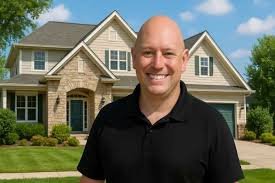
A $450,000 mortgage that closes 0.375% lower saves about $95 per month – roughly $5,700 over five years before tax treatment, refinance timing, or faster principal paydown. That is why the question of Cavalier Mortgage or First Heritage Mortgage matters in Charlottesville, where even small pricing differences can affect buying power in neighborhoods like Belmont, Crozet, and Forest Lakes.
By Duane Buziak, Mortgage Maestro, NMLS#1110647
Table of Contents
- What this comparison is really about
- Cavalier Mortgage or First Heritage Mortgage: core differences
- Side-by-side comparison table
- Charlottesville and Albemarle market context
- Loan options and borrower fit
- Cost, credit, and reserve considerations
- Implementation roadmap
- FAQ
What this comparison is really about
Most borrowers are not choosing between names. They are choosing between process, product range, pricing structure, and how well a lender or broker fits a specific file. A straightforward W-2 conventional purchase in Albemarle County is different from a self-employed borrower using bank statements, an investor looking at DSCR, or a buyer building in western Albemarle.
That distinction matters locally. Albemarle County’s median sold home price has been reported around the mid-$500,000 range, depending on period and source, and county-level market reports continue to show pricing pressure from limited supply in many submarkets. Zillow’s local market data for Albemarle County is one common reference point: https://www.zillow.com/home-values/515/albemarle-county-va/. In practical terms, a borrower shopping near Route 29 North or closer to Downtown Charlottesville often has to move quickly, and financing flexibility can matter almost as much as headline rate.
Cavalier Mortgage or First Heritage Mortgage: core differences
At a high level, the main difference is usually channel structure. A local mortgage brokerage can shop among wholesale investors and may be better positioned when a borrower needs a wider box of solutions. A retail lender may offer a more centralized in-house process and a narrower but more standardized product set. Neither model is automatically better. The right answer depends on the file.
For Charlottesville-area buyers, the decision often comes down to three questions. First, is your scenario plain vanilla or does it have complexity? Second, how sensitive are you to rate, lender fee, and total cash to close? Third, how much local responsiveness do you need when contracts move fast around UVA, Pantops, or Crozet?
Side-by-side comparison table
| Factor | Local mortgage brokerage model | Retail lender model such as First Heritage Mortgage | |—|—|—| | Product access | Often broader through multiple investors | Often narrower, based on internal offerings and approved channels | | Best fit | Standard files and edge-case files | Standard files, especially if they fit in-house guidelines well | | Rate shopping | Can compare across lenders | Usually compares within its own pricing structure | | Non-QM / bank statement / DSCR | More commonly available | Availability varies by lender | | Speed | Depends on lender partner and broker execution | Depends on internal ops and underwriting capacity | | Local market strategy | Often highly relationship-driven | Can also be local, but process may be more standardized | | Credit-safe prequal | Soft-pull options may be available | Varies by lender |
This is where borrower profile matters. If your file is conventional with strong credit, 20% down, and low debt-to-income, both channels may work. If you are self-employed, using rental income, buying a jumbo property, or need construction or 203k financing, broader program access can become more valuable.
Charlottesville and Albemarle market context
Charlottesville is not a one-speed market. In and around UVA, smaller homes and condos can attract quick competition tied to university demand and limited inventory. In Crozet, family housing demand has stayed resilient because of schools, commuting patterns, and lifestyle appeal. In Pantops and Forest Lakes, price sensitivity remains real, but buyers still face trade-offs between payment, commute, and available inventory.
According to public-facing market trackers, Albemarle County home values and sale prices remain well above many Virginia markets, which raises the stakes on loan structure. Redfin’s local data is another useful benchmark for price trends and competitiveness: https://www.redfin.com/county/2974/VA/Albemarle-County/housing-market. When supply is tight, a fully underwritten or well-documented preapproval can be more useful than a casual prequal letter.
Conforming loan limits also matter. In 2025, the baseline conforming loan limit for a one-unit property in most areas is $806,500, per FHFA/Fannie Mae guidance: https://www.fanniemae.com/. That means many Charlottesville and Albemarle purchases still fit conforming financing, but upper-bracket neighborhoods can move into jumbo territory fast.
Loan options and borrower fit
A borrower comparing Cavalier Mortgage or First Heritage Mortgage should first map the file to the likely loan category. Conventional loans usually reward stronger credit and lower debt ratios. FHA remains relevant for buyers who need more flexible credit treatment or a lower down payment. VA loans can be exceptionally efficient for eligible veterans, especially because they do not require monthly mortgage insurance, though funding fee rules still apply through the VA: https://www.va.gov/housing-assistance/home-loans/.
USDA can be useful in eligible rural areas outside the urban core. For Charlottesville-area buyers, that can matter more on the edges of the county than near central Charlottesville. Construction, 203k, bank statement, DSCR, foreign national, and other non-QM options are more specialized, and not every lender platform handles them equally well.
| Loan type | Typical minimum credit score seen in market | Down payment | Notes | |—|—|—|—| | Conventional | Often 620+ | 3%-20%+ | Better pricing usually comes with stronger scores | | FHA | Often 580+ | 3.5% | Mortgage insurance applies | | VA | Often 580-620+ lender dependent | 0% possible | Eligibility and VA standards apply | | USDA | Often 640+ automated benchmark | 0% possible | Geographic and income limits apply | | Jumbo | Often 680-720+ | 10%-20%+ | Reserve requirements are common | | Bank statement | Often 620-680+ | 10%-20%+ | Built for self-employed borrowers | | DSCR | Often 620-680+ | 20%-25%+ | Uses property cash flow rather than personal income |
Those score thresholds are not universal rules. They are common market starting points. Actual approval depends on debt-to-income ratio, reserves, occupancy, property type, and credit profile depth.
Cost, credit, and reserve considerations
Borrowers often focus on rate and miss the bigger math. Closing costs in Virginia commonly land around 2% to 5% of the loan amount, depending on points, title charges, escrows, and prepaid items. On a $450,000 loan, that can mean roughly $9,000 to $22,500. In a competitive Charlottesville market, seller concessions are not always easy to win, so total cash-to-close planning matters.
Reserve requirements can also separate lenders and loan programs. A standard owner-occupied conforming loan may require little or no post-close reserves in some cases, while jumbo financing may call for 6 to 12 months of housing payments in reserve. DSCR and non-QM products often land somewhere in between depending on risk profile. If your assets are concentrated in business accounts, retirement funds, or a recent home sale, document strategy matters as much as the amount itself.
| Cost or qualification factor | Common local range or benchmark | |—|—| | Closing costs | About 2% to 5% of loan amount | | Conforming limit, 1-unit, 2025 | $806,500 | | Conventional minimum score | Often 620+ | | FHA minimum score | Often 580+ | | Jumbo reserves | Often 6-12 months | | DSCR down payment | Often 20%-25% |
This is where a soft-pull prequalification can help. It lets a borrower pressure-test options without immediately taking a hard inquiry, which is useful if you are still deciding between conventional, FHA, jumbo, or a non-QM route.
Implementation roadmap
- Define the file type first. Are you a first-time buyer, move-up buyer, veteran, self-employed borrower, builder, or investor?
- Estimate realistic purchase range using local prices. In Albemarle County, median price levels mean payment tolerance matters more than broad online affordability calculators suggest.
- Compare loan channel fit. Ask whether the file needs broad program access or whether a standard retail execution is enough.
- Review credit, reserves, and cash to close. A 740 score with strong reserves has different leverage than a 620 score with limited liquid assets.
- Request a fee and payment comparison on the same day. Markets move, and stale quotes are not useful.
- Stress-test the monthly payment with taxes, insurance, HOA dues, and likely maintenance.
- Get a preapproval that matches local competition. In Charlottesville, weak paperwork can lose a house before price even becomes the issue.
FAQ
Is a mortgage broker always cheaper than a retail lender?
No. Sometimes yes, sometimes no. Broker channels can offer sharper pricing or a better fit, but retail lenders can be competitive on certain products or borrower profiles.
Is First Heritage Mortgage a bad option for Charlottesville buyers?
Not necessarily. A retail lender can be a solid choice if the file fits its credit box, product menu, and timing. The issue is fit, not label.
When does a local brokerage have the clearest advantage?
Usually when the borrower is self-employed, needs non-QM, wants DSCR, has unique income, or wants more than one investor option compared side by side.
What credit score should I target before applying?
For many conventional loans, 620 is a floor, but materially better pricing often starts higher. FHA can be more flexible. Jumbo and investor products usually want more.
How competitive is the Charlottesville market right now?
It varies by price point and neighborhood, but limited inventory still affects many areas. Homes near UVA, in Crozet, and in established Albemarle neighborhoods can move quickly.
Does soft-pull prequalification really help?
Yes, if you are still exploring options. It helps frame payment, program eligibility, and next steps without the same immediate credit impact as a hard pull.
Should I choose based on rate alone?
No. Compare rate, lender fees, mortgage insurance, reserve requirements, speed, and how likely the loan is to close on time.
The practical answer is simple: if your file is straightforward, compare both on the same day and let the numbers decide. If your file has any complexity at all, the better question is not just who quotes lower – it is who has the right loan for Charlottesville’s market realities and your actual documentation.
This article is for educational purposes only and does not constitute financial or legal advice.
Duane Buziak, Mortgage Maestro | NMLS: 1110647 | Licensed in VA · FL · TN · GA | UWM PRO ELITE 2025 | UWM Top 20 Purchase LO Virginia 2025 | UWM Speed to Close Industry Leading 2025 | Scotsman Guide Top Originator 2025 & 2026 | VA Broker of the Year 2024-2025 | Top 1% Nationwide | Coast2Coast Mortgage | DuaneBuziakMortgageMaestro.com | duane@coast2coastml.com | (804) 212-8663